

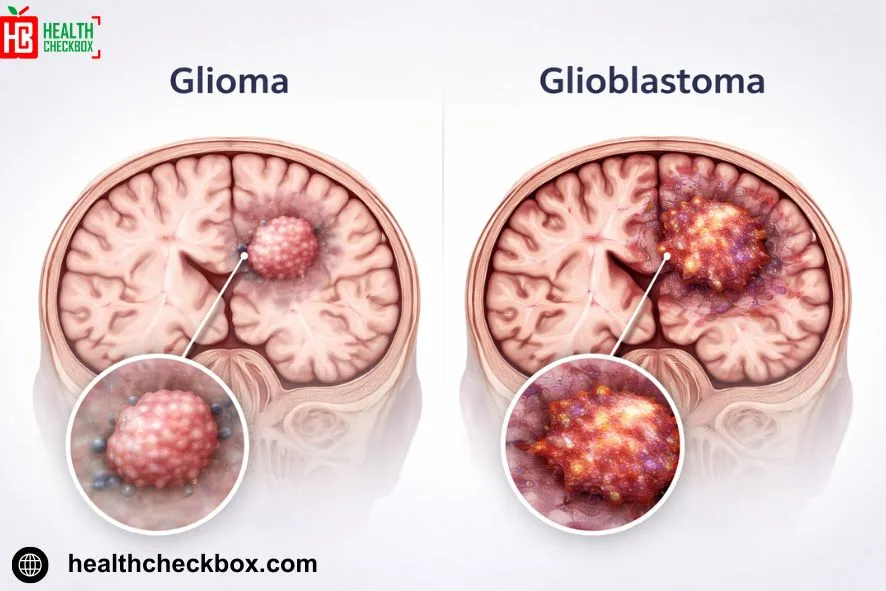
Brain tumours are a very serious medical problem that can affect how the brain functions. Among the different types of brain tumours, glioma and glioblastoma are the most commonly discussed, but most people are not clearly aware of the main difference between these two terms. Both tumors start in the brain’s supportive cells, but they behave very differently in terms of growth, severity and treatment response.
A term glioma is a general type of brain tumour, which starts in the supporting cells of the brain; on the other hand, glioblastoma is the most serious and fastest-growing form of glioma. Some low-grade gliomas grow slowly and may be managed effectively, but they still require careful monitoring and treatment. Now, in this article, we will explain everything, including its differences, its symptoms, causes and everything which you need to understand regarding this topic.
What is a Glioma?
A glioma is a type of tumor which is the forms when your body’s glial cells grow in unconditional way. Glial cells may support your nerves and help your central nervous system work. If they grow out of control, then they will create tumours in your brain or spinal cord. It is the primary tumour. That clearly means that they form directly in your brain or spinal cord. They are a very serious tumour that can be life threatening. But its treatment is available to help handle the disease.
What is Glioblastoma?
Glioblastoma is the most common type of malignant (cancerous) brain tumour in adults. It starts in special brain cells, which are known as astrocytes. It is a type of glial cell that is found in the brain and spinal cord. At that time, the cancer cells grow and multiply very quickly. They can spread to the nearby area of the brain and spinal cord, but they rarely spread outside these areas. The Glial cells include astrocytes, which are very important because they help nerve cells work properly. The Glioblastoma is also known as GBM, and it is the fastest growing type of astrocytoma. It develops from these astrocyte cells.
In the past, it was known as the glioblastoma multiforme. It is a very serious and aggressive cancer, and without any treatment, it will become life threatening in a short period.
Key Differences Between Glioma and Glioblastoma
| Feature | Glioma (General) | Glioblastoma (Specific) |
| Grading | Can be Grade 1, 2, 3, or 4. | Always Grade 4 (the most aggressive). |
| Aggression | Ranges from slow-growing (low-grade) to fast-growing. | Very aggressive and fast-growing. |
| Cell Type | Can arise from various glial cells (astrocytes, oligodendrocytes, or ependymal cells). | Specifically originates from astrocytes. |
| Treatment | May be treated with surgery alone or a combination of therapies based on grade. | Almost always requires intensive triple therapy: surgery, radiation, and chemotherapy together. |
| Prognosis | Low-grade versions may have survival measured in years or decades. | Generally has the poorest prognosis, with median survival often measured in months. |
Causes and Risk Factors: Glioma and Glioblastoma
Now, we are providing some causes and risk factors of Glioma and Glioblastoma:
Cause of Glioma
The exact cause is not known, but it occurs when the DNA in the brain is in glial cells, which change. Because of these changes, the cells may start growing too fast and form a tumour. The risk factors include exposure to ionising radiation, inherited genetic syndromes and increasing age. It will be a higher incidence in adults aged around 45 to 65.
Risk Factors of Glioma
Anyone can develop a glioma. In the given points, some factors are mentioned that may increase the risk:
- Age: Gliomas are most common in older people, aged around 65 or more, and also in younger children under 12.
- Family History: Some of the inherited genetic conditions from family members also increase the risk.
- Radiation or Toxin Exposure: The exposure to ionising radiation, it will be particularly in childhood.
If the brain or spinal cord tumours run in your family, then doctors may suggest genetic testing to check your cancer risk.
Note: Most gliomas do not have clear risk factors, so there is no need to panic.
Cause of Glioblastoma
Glioblastoma is an aggressive and fast growing brain tumor that arises from astrocytes, the supporting cells. Because of the complex genetic mutation. While the exact cause of this is largely unknown and usually irregular, major risk factors of its include previous radiation therapy to the head, older age and rare genetic syndromes such as Li-Fraumeni syndrome.
Risk Factors of Glioblastoma
The glioblastoma is most common in adults, mainly whose age is around between 45 and 70 years, with the average diagnosis age around 64. Now, some factors are given that increase the risk:
- Genetic Conditions: Some inherited disorders like neurofibromatosis, Li-Fraumeni syndrome, etc.
- Previous Radiation Therapy: Radiation treatment to the head in the past, which can increase the risk.
Symptoms: Glioma and Glioblastoma
Both gliomas and glioblastomas cause symptoms by pressing on or infiltrating the brain tissues. Here are some of the most common symptoms for both:
- Headaches
- Seizures
- Cognitive decline/Memory loss
- Personality or mood changes
- Weakness or numbness
- Trouble speaking (Aphasia)
- Vision issues
- Nausea
- Vomiting
- Balance
- Coordination problems
- Fatigue
Diagnosis: Glioma and Glioblastoma
The doctor will first use different types of tests to check the brain and confirm the type of tumor.
- MRI Scan: The MRI scan is the most important test. It gives a proper image of the brain and shows the size and the exact location of the tumour.
- CT Scan: It will help to find any abnormal growth quickly, mainly in emergency cases.
- Biopsy: A small sample of the tumour is taken and tested to determine the exact type and grade of the tumour.
- Neurological Exam: Experts check the memory, vision, balance and see how the brain is working.
The early diagnosis is very beneficial because it helps doctors start the right treatment on time.
Treatment Options: Glioma and Glioblastoma
The treatment of both includes the different methods that are combined to control the tumour.
- With the help of surgery, doctors may try to remove the tumours as much as possible without harming the brain.
- When surgery is completed, radiation therapy helps to kill the remaining tumour cells. It is usually done daily for a few weeks.
- The chemotherapy is the most important drug that is used, and it is temozolomide. It is taken as a tablet during and after the radiation.
- The tumour treating field (TTF) is a portable device that uses an electric field to stop the tumour cells from growing. It is mostly used in glioblastoma after the surgery and radiation.
Survival Rates and Prognosis: Glioma and Glioblastoma
It is the extended outcome of the disease, which includes how serious it is and how long a person may live after the diagnosis. In glioma and glioblastoma, the prognosis is usually determined by the tumour grade, the age and the health condition.
For Glioma
The low and high grade tumours are included in this, so the prognosis can be very different.
Low-grade glioma (Grade 1 & 2)
- The slow-growing tumor
- Best prognosis
- Many patients can live 5 to 10 years or even longer with treatment
High-grade glioma (Grade 3)
- Faster growth than low-grade
- Needs aggressive treatment
- Survival is shorter compared to low-grade glioma
For Glioblastoma (Grade 4 Glioma)
It has the most serious prognosis because it grows very fast and spreads into nearby brain tissue.
- Very aggressive and difficult to treat
- A tumour often comes back even after treatment
- Average survival is around 12 to 18 months
- About 5 to 10% patients may survive up to 5 years, which depends on MGMT methylation, IDH mutation, and treatment response.
- The survival may improve with surgery, radiation, and chemotherapy
Important Factors that Affect Survival
- Younger patients may do better
- Tumour location in the brain
- How much tumour is removed in surgery
- Response to treatment
- Overall health of the patient
Living with Glioma or Glioblastoma
Living with glioma or glioblastoma can be most challenging, as it affects daily life, energy levels and emotions. Most people feel tired, stress and fatigue, but with the proper care of their health, lifestyle and family support is most important. So, handling the condition makes it possible to live a better life.
- Follow the proper treatment plan
- Take the medicines on time
- Go for regular check ups
- Eat the healthy foods
- Take proper rest and sleep
- Do light exercise if the doctor allows
- Handle your stress
- Stay connected with families
- Take help in daily activities if needed
When should I See my Healthcare Provider?
First thing is to consult a doctor if you notice any symptoms in the brain or nervous system. Early treatment is helpful to start the treatment on time and improve outcomes. Remember that do not ignore these symptoms if they are new, severe or getting worse.
- Headaches
- Seizure
- Vision problem
- Difficulty in speaking or understanding
- Memory loss or confusion
- Weakness or numbness in the body
- Trouble with balance or walking
So, if you can see any of these symptoms, then immediately consult with your doctor.
Conclusion
Glioma and glioblastoma are very serious brain tumours in medical conditions. But knowing their differences, their symptoms and treatment options can be helpful in early diagnosis and better results. Gliomas have the best outcomes in some cases, and on the other hand, glioblastoma is more aggressive and needs a strong treatment. At the end of the summary, regular check up, early medical care and maintaining your lifestyle are the very big differences in handling these conditions.
Note: At the end, this article is only for basic information purposes. So, if you are noticing any symptoms related to this, then first, consult with your qualified doctor or health care professional before taking any action.