

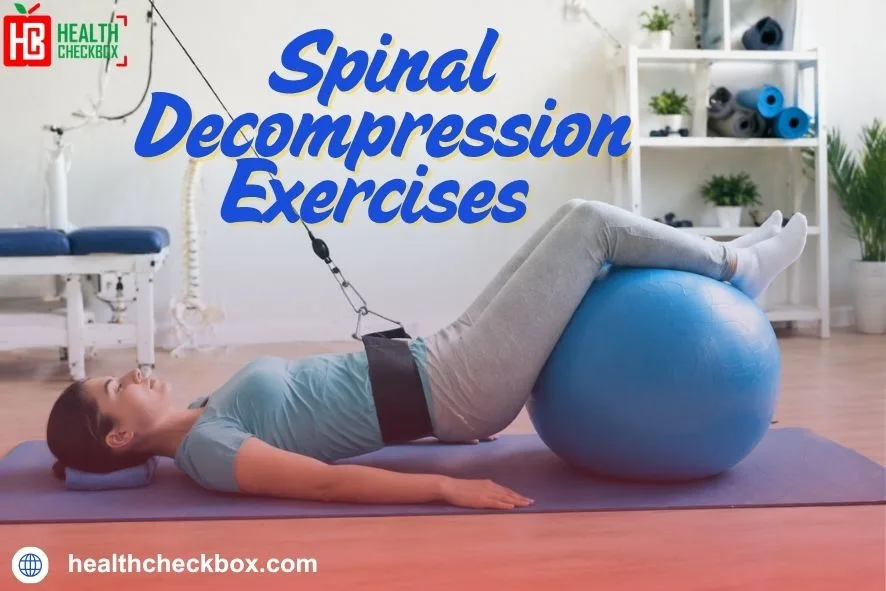
Back pain is a very common problem nowadays. Mainly, these issues can occur for those people who sit for a long time or have poor posture. Because of this, the spine gets compressed, and it can be the main reason for lower back pain, stiffness and many other problems that are seen in our body. The simple and natural way to manage these issues is the spinal decompression exercises. This exercises is gently stretches the spine and may temporarily improve spinal alignment. Also, it helps to improve the blood circulation.
Doing this exercise, the result may reduce the pain and support healing. The best part is that these back pain relief exercises can be done at home, which is perfectly suitable for many people, but not everyone. With daily practice and managing the routine, it can help to improve the flexibility of the body and keep your spine healthier. Now, in this blog, we will discuss all the necessary points related to spinal decompression exercises and what kind of exercises you can do at home.
What Are Spinal Decompression Exercises?
Spinal decompression exercises are very simple stretching movements which help to reduce the pressure in your spine. The spine is made up of small bones and discs. Because of bad posture, heavy lifting and long-term sitting, these discs can get compressed, which is the main reason for back pain and discomfort. These exercise are worked as they gently stretch your spine and its creating space between the discs. It helps to reduce pressure on nerves and allows better blood flow, which supports healing.
The most important thing to know is that these exercises are different from spinal decompression therapy. This therapy is done with the use of machines under the experts, while on the other side, exercises are natural and easy to do at home. If you practice these spinal stretch exercise so, it can help to improve your spine health and reduce daily discomfort.
Benefits of Spinal Decompression Exercises
There are so many benefits of doing the spinal decompression exercise daily. These exercise not only for reducing pain but it is also improve the body movements and posture. In the section below, points are given:
- It provides effective back pain relief by reducing pressure on spinal discs.
- Because of exercise, it helps in sciatica pain relief by relaxing the nerves.
- It improves posture, especially for people who sit for a long time.
- It increases flexibility for the body and makes your body feel more active.
- Reduce stiffness and tightness in the back muscles.
- Its may imporve blood circulation, which helps to recover faster.
Who Should Do These Exercises?
The spinal decompression exercises are best for so many people, especially for those who experience daily back pain. If you have these problems, then you should consider doing these exercises, which are given below:
- If you have chronic back pain or neck pain.
- You are suffering from a herniated disc.
- If you feel pain because of sciatica.
- Those people who have problems with stenosis or scoliosis.
- If you have a poor posture.
These exercises may not be suitable for every person. If you have a back injury, recent spine surgery, or high pain, then in these conditions, you should ask a doctor before starting. Remember that if you are doing exercise without any proper guidance, it may increase more problems related to it.
Best Spinal Decompression Exercises at Home
Here are some of the best spinal decompression exercises at home, such as:
Prone Pillow Decompression Stretch
- The first step is to follow that, take a soft pillow and place it on a bed or a flat table.
- Lie down on your stomach and place the pillow under the pelvic area.
- Just adjust your body in a way that your arms hang down from the edge of the bed or table.
- Then, let your arms and head stretch towards the floor in a relaxed position.
- When you start to do this exercise, then make sure that take a slow and deep breath to relax the body.
- Hold this step for about 30 to 60 seconds at the start. Remember, that after a few days, you can increase the duration time by 2 to 3 minutes.
- Try this exercise for around 15 to 20 minutes with taking a short breaks of 1 to 2 minutes between each round.
- After completing the exercise, you can feel the gentle stretch in your lower back. It helps in spinal decompression, but always remember that if you feel too much pain or any problem in your body, then stop doing the exercise at that time.
- If you do not feel enough support, you can place one more pillow under your hips.
Child’s Pose (Balasana)
- To start this exercise first your kneel on the floor with your big toes touching and knees separated about the hip to mat width.
- After that, exhale and lie your torso down between your thighs and extending the spine.
- Then, lay arms along the body, palms up or reach them forward with palms down for an active stretch.
- After completing this process then rest on the floor or the mat.
- Hold this position for 30 seconds and take a deep breath.
- Then, to come back slowly place your hand on the floor and lift your body back to the starting position.
- Remember that if you feel any problems in your knees and ankles, then use a soft blanket under them for support.
Cat-Cow Stretch
- To begin the exercise on your hand and knees in a table top position, with wrists directly under the shoulders and knees under the hips.
- Then, inhale as you breathe in the lower your stomach towards the mat, lift your chest and tailbone towards the ceiling, and look up gently like a cow pose.
- After that, when you breathe out, round your spine up towards the ceiling and gently pull your belly button towards your spine. It is a tuck your chin towards your chest.
- Follow the procedure, and move between the two poses by taking a breath and holding for 8 to 12 repetitions.
Hanging / Dead Hang
- Before starting this exercise, first set up the secure, high overhead bar.
- Use a bench or table step to reach it easily.
- Then, grip the bar with the overhand grip, the palms facing away across the shoulder.
- After that, gently take your feet off the step, it aloowing your body weight to hang freely. Remember, keep your arms straight during the process.
- Maintaining calm and continuous breathing slowly.
- After completing the process, step back into the bench slowly before releasing your hands.
- You can repeat this exercise approx 2 to 3 times. It is dependent on your comfort level.
Side-Lying Decompression
- Rest on your side on your bed or couch.
- After that, lie with your knees bent and your hands together.
- Then drop your shins off the table.
- After that, you feel your pelvis drop on one side and your lower back being stretched.
- You should do this process for around 20 to 30 seconds. This step should be completed for 10 to 15 minutes with 30-second breaks.
Standing Kitchen Sink Stretch
- For this exercise, you have to stand, facing a strong kitchen sink at a distance.
- Place both of the hands on the rim of the sink and hold it tightly.
- Then, walk backwards until you feel comfortable and not facing any pain in your hips.
- After that, soften your knees, straighten your arms and lower your chest toward the ground when pushing your hips backwards
- Let your spine be straight.
- Be in this position for thirty to sixty seconds.
- At last, slowly walk towards the sink and stand up straight.
Knees-to-Chest Stretch
- For doing the exercise, first lie on your back with legs straight or knees bent and feet flat on the floor.
- Then. slowly pull one knee up towards your chest untill a comfortable.
- After doing this process, the stretch may gently feel in the lower back and hip area.
- Keep the opposite leg relaxed
- Hold that for around fifteen to thirty seconds.
- Lower the leg and then repeat that 2 to 4 times on each side.
Butt Wiggling Chair Pose
- To begin, first stand with feet hip width apart or together and then sink into a deep squat.
- Then, move your weight back into your heels so that your toes feel light enough to lift.
- Lightly tense or squeeze the glutes to help the pelvis forward which stabilises the lower back.
- Then gently wiggle the hips to find the neutral alignment that helps to relieve tension in the lower area.
- At the end, you bring the thighs towards parallel when you keep the chest lifted.
- You can repeat this step around 3 to 4 times.
Safety Tips & Common Mistakes to Avoid
These exercises are very helpful for those who have back pain. When you start this exercise, then you should remember some important points. If you do the exercise in the wrong way, then it increases pain instead of reducing it. That is the main reason to follow the right method to avoid the small mistakes.
Safety Tips for Spinal Decompression
- At first, you should be aware that start with simple exercises like support hanging or basic stretches. Do not try a difficult exercise for the first time.
- When you are doing the exercise, then it is important to keep your stomach muscles slightly tight. Because it helps to support your spine and control the pressure.
- Breathe slowly and deeply when you’re doing the exercise in each and every step. By doing the exercise its helps your muscles relax and improve the stretching effect.
- It is best to do a short session daily apart from doing the long session.
- Always do 5 to 10 minutes of easy activity, such as walking or simple movement, before starting. This habit is to prepare your muscles and reduce the risk of injury.
Common Mistakes to Avoid
- Do not try to stretch your body over. It is not good for your spine. Always move slowly and gently.
- If you feel sharp pain, discomfort, or any problem related to health, then stop at that time immediately.
- Starting exercise without doing a warmup can make your muscles stiff and it increases the chance of strain. So, avoid doing exercise directly.
- If you do exercise in the wrong body position, then it can reduce the benefits and it may cause more harm.
Note: Remember that always listen to your body and take things slowly. These spinal decompression exercises work best when you do regular base, with all safety rules and proper techniques.
How Long Does It Take to See Results?
The right outcomes of spinal decompression exercise do not come faster, but with daily practice and the correct method, you can see the improvement over time.
- If your pain is not very serious, you may start feeling relief within a few days, but results may vary.
- If your pain is extreme or on a regular basis, then it may take around 2 to 4 weeks to improve the pain, movement and flexibility.
- You have been dealing with back pain for a very long time, and it may take approx 4 to 8 weeks or more.
If you do this exercise daily, it helps to support your spine and improve the result to recover faster compared to doing it occasionally.
When to See a Doctor?
You may consult with an expert when you see this:
- When pain increases from sciarica or herniated discs.
- If you are feeling weakness or tingling in your arms or legs, then immediately consult with a doctor.
- If your pain increases with standing, walking or doing any basic activities.
- If you have a spinal fracture, malignancy, or previous spinal hardware issue.
- Stop doing the exercise and consult a doctor if the pain increases after exercise.
Conclusion
At the end of the conclusion, we have explained how the spinal decompression exercises can be helpful to reduce back pain and improve spine health. These exercise is so simple and natural way to reduce back pain. It supports better flexibility and posture. By doing regular back exercises and using the correct techniques, you can keep your back healthy and feel comfortable every day.
Note: This blog is only for informational purposes. So, before doing any exercise, make sure to first consult with the best doctor for better results.