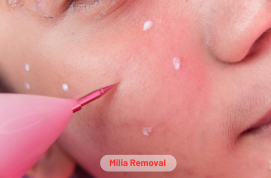
A skin condition that causes tiny white bumps under the skin, called milia, is also known as milk spots. These cysts or bumps take place under the outer layer of the skin, caused by dead cells. It commonly appears on the face parts such as eyelids, nose, cheeks, and lips. A milium starts forming at the base of the hair follicle or sweat gland and contains a protein called keratin. It is generally found in newborn babies. However, adults are also affected by milia, but these do not pose any harm to their health. Milia is often compared to whiteheads, acne, and pimples. However, milia are different from acne and pimples. In some cases, milia removal treatment is required due to widespread damage to the skin.
Considering milia removal? HealthCheckbox connects patients with accredited dermatologists and skin specialists worldwide.
Types of Milia
The following are the different types of Milia:
- Neonatal Milia: Found in newborn babies, it appears on the nose, cheeks, chin, and forehead. Neonatal presents in babies from birth.
- Primary Milia: These are small cysts that mostly appear on eyelids, forehead, cheeks, or genitals. They can develop in both adults and children.
- Secondary Milia: Secondary milia start occurring when your skin is damaged due to sunburn, rashes, and blisters. This occurs due to overuse of ointments and skin creams.
- Juvenile Milia: These milia are caused by inherited conditions. Juvenile milia can occur during birth and can appear later.
- Milia en Plaque: These are rare types of milia that affects middle-aged women. This kind of milia clumps together on raised patches on the skin. Usually develop on eyelids, cheeks, jaws, and behind the ears.
- Multiple Eruptive Milia: This is an uncommon condition that causes groups of cysts, forms in weeks to months on the face. These can be itchy and start to appear on the arms and upper abdomen.
Which Body Parts are Affected by Milia?
Different skin areas that are mostly affected by milia are as follows:
- Cheeks
- Forehead
- Nose
- Chest
- Arms
- Legs
- Genitals like penis
- Inside the mouth
- Eyelids
- Lips
Causes of Milia
When your body fails to get rid of dead skin cells, the new skin grows on top of them and traps dead cells under the skin. These trapped dead skin cells get hardened and turn into cysts that become the cause of milia. Despite this, there are additional milia causes as well, which include:
- Genetic issues
- Overuse of steroid creams and ointments
- Specific allergy
- Some particular food
- Autoimmune response
- Sunburn
- Medications
- Deep chemical peels
Diagnostic Tests of Milia Removal Treatment
A skin specialist diagnoses milia after conducting a physical examination to know about the symptoms. Visual examination of the cysts on the skin can identify an accurate diagnosis. However, sometimes the test is not required among newborn babies. Other than that, in rare cases, a doctor needs to do a skin biopsy.
Milia Removal Treatment Options
Milia are usually harmless and resolve themselves over time. It is not necessary to get treatment however, if you have rare milia and it is getting worse over time, then you can opt for treatments that are as follows:
- Chemical Peels: This cosmetic treatment is used to remove facial concerns like wrinkles, fine lines, acne, and milia as well. It requires multiple sessions according to your skin to get effective results. However, one should opt for this treatment when your milia is extensive.
- Extraction: When a dermatologist found a worse condition of milia on any area of the body or face they often recommend surgical treatment to remove milia by de-roofing with a help of sterile needle or blades to get out the content squeezed.
- Curettage: In curettage, a dermatologist uses a small curet to scrape and remove the keratin-filled contents of the milia cyst.
- Radio Frequency: It uses targeted electrical energy to desiccate the keratin contents within the milia cyst, allowing the treated material to be removed or naturally expelled. It is a precise option with minimal surrounding tissue damage.
- Laser Treatments: Laser treatment for milia removal is an effective way to discard extensive milia from the skin. It involves either CO2 ablation or erbium YAG.
- Topical Creams or Lotions: Prescribed topical retinoids creams like tretinoin or adapalene can control the spread of milia.
- Cryotherapy: In this procedure, skincare professionals use liquid nitrogen or argon gas for cold therapy. Through conducting cold therapy a dermatologist removes dead cells from the skin.