


• appointment@healthcheckbox.com
  • +91 844 817 7919
  • appointment@healthcheckbox.com
  • +91 844 817 7919
HealthCheckbox
Book An Appointment
Menu
HealthCheckbox
  • Home
  • Treatments
  • Our Network
    • Doctors
    • Hospitals
  • About us
  • Testimonials
  • Contact us
Electrophysiology Study product Image
Home Cardiology Electrophysiology Study Treatment

Electrophysiology Study Treatment

  • Description
Description

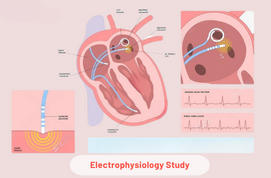
An electrophysiology study test is conducted to determine electrical activity of a person’s heart. It is an invasive procedure that evaluates any improper beating of the heartbeat, which is called cardiac arrhythmia. By using meticulous electrophysiologic studies or EPS, cardiologists can know about cardiac arrhythmias and how they cause abnormalities in the electric impulse of the cardiac rhythm. 

Normally, the contraction of various chambers of the heart is coordinated with electrical impulse. This causes proper blood flow and is called heart rhythm, so the EP test is done to check abnormalities in the heart.

Reasons to do an Electrophysiology Study

This test is conducted due to various reasons:

  • To evaluate irregularities in the heart, like fast heartbeat, this test will help to determine the suitable treatment.
  • The place that is causing abnormal electrical signals is treated through the catheter ablation process.
  • How well medicines are working on arrhythmia.
  • Diagnose the condition of the heart, such as sudden cardiac arrest, which can even cause death.
  • This study can identify the unusual feeling of unconsciousness.
  • Type of arrhythmia.
  • If the pacemaker has to be implanted.
  • This EP test can identify the best treatment for the patient.

Is There Any Risk of an Electrophysiology Test?

There may be possibility of the following risks of an electrophysiology study which are as follows:

  • The catheter, which is inserted into the vessels during the test, may cause damage to them.
  • There are rare chances to have a hole in the heart.
  • Catheter sites can cause infection and bleeding.
  • Chances of stroke and heart attack.
  • Abnormal heart rate can make you feel dizzy.
  • Damage to heart valves.
  • In rare cases, it can cause death.
  • There can be development of clots of blood under the skin.

How is the Electrophysiological Test Conducted?

This test is done to examine abnormalities in the heart, so it is conducted in this way:

Before the Procedure

There are some advices which are suggested by a doctor before starting the EP test, such as:

  • You are advised by a doctor not to drink or eat for a certain period of time, that is, overnight and before the test.
  • Ask a healthcare provider before taking any medicines.
  • All medical tests should be provided to your cardiologist to know about your medical condition.
  • You will be asked to sign a consent form before starting the procedure.

During the EP Test

You have to follow these instructions during the entire procedure:

  • This procedure will take place in a sterile room, i.e. electrophysiology laboratory, where you have to remove all metal accessories and put on sterile hospital gown.
  • The groin part will be shaved off and cleaned where the catheter has to be inserted. This is done to avoid infection.
  • The patient will be monitored by monitoring equipment to check body vitals like blood pressure, heart rate, etc.
  • Now the nurse will put IV into your arms to give you anesthesia to relax throughout the procedure.
  • A local anesthetic is injected to numb the groin area, by making a small incision, and then a small-sized sheath tube is inserted into the artery.
  • After this, an EP catheter is inserted through the sheath towards the heart.
  • The position of the insertion tubes are seen in the video screen along with body vitals.
  • Now cardiac mapping is done by recording electrical signals through one catheter, which increases heart rate. An irregular heartbeat is controlled by damaging abnormal electrical connections is called catheter ablation.
  • After completing the whole procedure, the catheter is removed, and the nurse puts pressure on the puncture area to stop bleeding.

After the EP Test

After conducting the test, an individual is shifted to the recovery room. Patient has to remain under observation by lying on the bed for a few hours by keeping the leg straight. After recovering, your doctor may discharge you by advising you on some important instructions. You will also be given some medications like painkillers and antibiotics to recover from the pain, swelling due to the cut.

Note: If there is bleeding from the cut, swelling, or any other unusual problem, then you should immediately contact your healthcare provider to seek medical support.

Our Other Services

  • Autoinflammatory Diseases product Image Autoinflammatory Diseases Treatment
  • Blood Cancer product Image Blood Cancer Treatment
  • Right Heart Catheterization product Image Right Heart Catheterization Treatment
  • Hepatitis B Treatment product Image Hepatitis B Treatment
  • Astigmatism Correction product Image Astigmatism Correction Treatment
  • Turbinate Reduction Surgery product Image Turbinate Reduction Surgery
  • Blemish Removal product Image Blemish Removal
  • Hyperthyroidism Treatment product Image Hyperthyroidism Treatment
  • Vulval Biopsy product Image Vulval Biopsy Treatment
  • Ovarian Cyst Removal product Image Ovarian Cyst Removal Treatment

Latest Health Tips

Blood Cancer Symptoms-blog img
08 Jan
Health Tips

Blood Cancer Symptoms: Early & Stages-Wise Symptoms

  • March 31, 2026
  • By author-avatar Dr Areeb Zafar Hashmi
One of the most threatening diseases in today's life is blood cancer...
Continue reading

How Long Can You Survive Breast Cancer Without Treatment-blog img
14 Nov
Health Tips

How Long Can You Survive Breast Cancer Without Treatment?

  • March 31, 2026
  • By author-avatar Dr Areeb Zafar Hashmi
Breast cancer is one of the major cancer diseases in the world. It a...

Continue reading

13 Nov
Health Tips

Stages of Stomach Cancer

  • March 31, 2026
  • By author-avatar Dr Areeb Zafar Hashmi
Stomach cancer, also known as gastric cancer, is a serious disease t...
Continue reading

Prostate Cancer Symptoms-img
06 Nov
Health Tips

Understanding Prostate Cancer Symptoms

  • March 31, 2026
  • By author-avatar Dr Areeb Zafar Hashmi
Prostate cancer is a major global health problem. According to the G...

Continue reading

Oral Cancer Symptoms-blog img
31 Oct
Health Tips

Oral Cancer Symptoms: Early Warning Signs

  • March 31, 2026
  • By author-avatar Dr Areeb Zafar Hashmi
When cancerous cells develop in the mouth or throat, it is known as ...

Continue reading

Anal Cancer Treatment Cost in India-blog img
18 Oct
Health Tips

Anal Cancer Treatment Cost in India

  • March 31, 2026
  • By author-avatar Dr Areeb Zafar Hashmi
Anal cancer rarely occurs, but it's a serious one, and it requires i...

Continue reading

Bile Duct Cancer Treatment Cost in India-blog img
16 Oct
Health Tips

Bile Duct Cancer Treatment Cost in India

  • March 31, 2026
  • By author-avatar Dr Areeb Zafar Hashmi
The intestine, gallbladder and the liver are all connected by the sm...

Continue reading

Bone Cancer Treatment Cost in India-blog img
13 Oct
Health Tips

Bone Cancer Treatment Cost in India

  • March 31, 2026
  • By author-avatar Dr Areeb Zafar Hashmi
A bone cancer can be a life-threatening disease for some people. In ...

Continue reading

Submit Your Enquiry

    IMPORTANT LINKS
    • Home
    • Treatments
    • Testimonials
    • About us
    • Contact us
    • Privacy Policy
    • Terms & Conditions
    • Refund and Cancellation Policy
    IMPORTANT TREATMENTS
    • Anal Cancer Treatment
    • Bile Duct Cancer Treatment
    • Bladder Cancer Treatment
    • Blood Cancer Treatment
    • Bone Cancer Treatment
    • Brain Cancer Treatment
    • Breast Cancer Treatment
    • Car T-Cell Therapy
    • Cervical Cancer Treatment
    Latest Posts
    • MRI vs CT Scan: Which is Better for Diagnosis?
    • Is Sitting Too Much Harmful? Health Risks of a Sedentary Lifestyle Explained
    • Difference Between Glioma and Glioblastoma: Causes, Symptoms & Survival Guide
    • How to Boost the Immune System Naturally at Home?
    • Benefits of Regular Health Check-Up | Early Detection & Prevention
    Contact Us

    appointment@healthcheckbox.com

    Phone No:
    +91 844 817 7919

    Address:
    E-21C, Sector-8, Noida, UP-201301, India

    Trustpilot
    ©️ HealthCheckbox.com | Operated by AYUSHMITA HEALTHCARE PRIVATE LIMITED.
    payments
    • Home
    • Treatments
    • Our Network
      • Doctors
      • Hospitals
    • About us
    • Testimonials
    • Contact us

    Book Appointment

      Facebook X Instagram YouTube linkedin WhatsApp WhatsApp
      Chat Icon
      Book An Appointment