


• appointment@healthcheckbox.com
  • +91 844 817 7919
  • appointment@healthcheckbox.com
  • +91 844 817 7919
HealthCheckbox
Book An Appointment
Menu
HealthCheckbox
  • Home
  • Treatments
  • Our Network
    • Doctors
    • Hospitals
  • About us
  • Testimonials
  • Contact us
Radiofrequency Ablation product Image
Home Surgical Oncology Radiofrequency Ablation Treatment

Radiofrequency Ablation Treatment

  • Description
Description

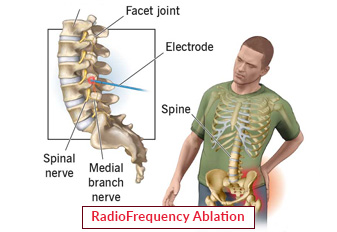
Radiofrequency ablation (RFA) is a minimally invasive method, employing heat created by radio waves to kill particular tissue, such as tumors or nerves. Chronic pain, particularly in the neck, lower back, or arthritic joints, is usually treated by warming and breaking the nerves that convey pain signals to the brain. RFA is also used to treat various medical conditions, including cardiac arrhythmia, chronic venous insufficiency, and benign and malignant cancers. A needle-like probe or transducer is put into the body during the procedure, which is normally done under local anesthesia and guided by imaging methods such as ultrasound.

The process itself usually takes less than an hour and is not painful. Before the procedure, you should discuss with your doctor about anxiety or discomfort. Overall, the activity shouldn’t hurt, though you might experience some slight pressure or discomfort. The testing and stimulation portions of the process might cause you some pain related problems.  Multiple names of RFA are listed below:

  • Radiofrequency Neurotomy
  • Rhizotomy
  • Fulguration
  • Radiofrequency Catheter Ablation

How Does RFA Work?

RFA uses radiofrequency energy to generate heat at a specific tissue or nerve in the body. To target a specific location while avoiding overheating of neighboring healthy tissues, the raised temperature of RF energy is carefully controlled. This radiation not only heats the target but also causes the cells in that location to clot. When it comes to pain treatment methods like facet RFA, the heat harms the nerves that provide pain signals. This interruption provides long-term respite to the patient by blocking pain signals.

Types of Radiofrequency Ablation

There are three types of RFA and each of them has its own characteristics and application. The choice of which type to use depends on the medical condition being treated. These are listed below:

  • Thermal RFA: This generates heat to create death of cells in the target tissue. It requires heating the target tissue to a maximum temperature by using radiofrequency energy.
  • Cool RFA: It involves the use of an electrode with cooling technology to prevent excessive tissue charring during the activity. It gives heat, but the cooling effect helps protect nearby tissues and allows for larger lesion sizes.
  • Pulsed RFA: Instead of delivering heat continuously, it delivers radiofrequency energy in sporadic bursts or pulses. This method seeks to alter pain signals without resulting in coagulative necrosis or tissue damage. 

Conditions Treated by RFA

Fulguration is used for a variety of medical conditions. These are mentioned below:

  • Chronic Pain Management: RFA frequently treats persistent pain in the knees, pelvis, neck, and back. To decrease or get rid of pain, it entails burning the nerve that sends pain signals to the brain. 
  • Treatment for Tumors: RFA can be used to reduce or eliminate nodules, tumors, and other bodily growths. In organs like the liver, where it works well for hepatocellular cancer, it can be used for both benign and malignant tumor growth.
  • Renal Denervation: RFA has been investigated as a technique to ablate nerve endings in the renal arteries in order to treat resistant hypertension, despite the fact that recent phase three trials have not demonstrated appreciable drops in blood pressure.
  • Heart Conditions: Atrial fibrillation and supraventricular tachycardia are two arrhythmias that are treated with RFA in cardiology. Restoring a normal heartbeat entails ablating the heart’s aberrant electrical circuits.
  •  Palliative Care: In this case, RFA is also used to treat patients with severe metastatic bone disease. Patients who are not eligible for or do not respond to generalized treatments.
  • Benign Bone Tumors: It is more popular as a less invasive and damaging option to surgery for treating benign bone tumors, especially osteoid osteomas.

Benefits of RFA

Advantages of radiofrequency ablation are given below:

  • Pain relief
  • Improved function
  • No surgery
  • Quick recovery
  • Safe & effective
  • Long-term relief
  • Non-invasive
  • Used for various condition

Radiofrequency Ablation Risks

There are several potential risks and complications connected with RFA that are mentioned below:

  • The procedure can cause damage to nerves and tissues near the area where the needle is inserted.
  • There are high chances of infection in the area that is operated on.
  • It is rare, but bleeding can occur at the insertion place.
  • In some cases, pain may permanently worsen after the procedure.
  • Swelling or bruising can occur at the insertion site.
  • Some patients may experience weakness or numbness at the insertion site.
  • Around six to twelve months following the treatment, the treated nerve may grow again, which could result in the recurrence of pain sensations.

Procedure of Radiofrequency Ablation

  • Before the Procedure:
    • You can discuss with your doctor about pain, medical history, and treatment options. After that, a healthcare expert will explain the RFA procedure and its benefits and risks.
    • If you want to lessen the chance of bleeding, then you should try to stay away from blood thinner drugs.
    • Fasting for a few hours before under-going the activity may be required, particularly if sedation is being utilized.
  • During the Procedure:
    • After being led to a treatment room, you will be instructed to lie down comfortably. For sedation, an IV line may be placed.
    • A local anesthetic drug is given that numbs the area to alleviate the pain.
    • Imaging techniques may be used by the doctor. It includes X-ray or ultrasound, to find out the correct area that needs treatment.
    • A thin needle that will guide the targeted nerve is inserted into the skin.
    • After the needle is in place, electromagnetic energy is applied to the nerve. This heat stops the nerve’s ability to send pain signals to the brain.
    • The medical personnel will monitor your comfort and vital signs throughout the treatment.
  • After The Procedure:
    • You will be taken to a recovery area where you can rest for a short time.
    • In some cases, you will notice swelling on the operated area. And this type of side effect is normally tolerable with over-the-counter painkillers.
    • You should not lift heavy objects. Try to avoid performing strenuous exercises.
    • Regular consultation with a doctor is advisable. This will speed up your recovery and relieve you from the ongoing pain gradually.

Our Other Services

  • Parkinson’s Treatment Product Image Parkinson's Disease Treatment
  • molar-pregnancy-treatment product Image Molar Pregnancy Treatment
  • Renal Angiography Product Image Renal Angiography Treatment
  • Melanoma Surgery product Image Melanoma Surgery
  • Vaginismus Treatment product Image Vaginismus Treatment
  • cervical-conization product Image Cervical Conization Treatment
  • Endoscopic Vein Harvesting product Image Endoscopic Vein Harvesting
  • Vulval Biopsy product Image Vulval Biopsy Treatment
  • cart t cell therapy product img Car T-Cell Therapy Treatment
  • Myocardial Infarction Treatment product Image Myocardial Infarction Treatment

Latest Health Tips

Blood Cancer Symptoms-blog img
08 Jan
Health Tips

Blood Cancer Symptoms: Early & Stages-Wise Symptoms

  • March 31, 2026
  • By author-avatar Dr Areeb Zafar Hashmi
One of the most threatening diseases in today's life is blood cancer...
Continue reading

How Long Can You Survive Breast Cancer Without Treatment-blog img
14 Nov
Health Tips

How Long Can You Survive Breast Cancer Without Treatment?

  • March 31, 2026
  • By author-avatar Dr Areeb Zafar Hashmi
Breast cancer is one of the major cancer diseases in the world. It a...

Continue reading

13 Nov
Health Tips

Stages of Stomach Cancer

  • March 31, 2026
  • By author-avatar Dr Areeb Zafar Hashmi
Stomach cancer, also known as gastric cancer, is a serious disease t...

Continue reading

Prostate Cancer Symptoms-img
06 Nov
Health Tips

Understanding Prostate Cancer Symptoms

  • March 31, 2026
  • By author-avatar Dr Areeb Zafar Hashmi
Prostate cancer is a major global health problem. According to the G...

Continue reading

Oral Cancer Symptoms-blog img
31 Oct
Health Tips

Oral Cancer Symptoms: Early Warning Signs

  • March 31, 2026
  • By author-avatar Dr Areeb Zafar Hashmi
When cancerous cells develop in the mouth or throat, it is known as ...
Continue reading

Anal Cancer Treatment Cost in India-blog img
18 Oct
Health Tips

Anal Cancer Treatment Cost in India

  • March 31, 2026
  • By author-avatar Dr Areeb Zafar Hashmi
Anal cancer rarely occurs, but it's a serious one, and it requires i...

Continue reading

Bile Duct Cancer Treatment Cost in India-blog img
16 Oct
Health Tips

Bile Duct Cancer Treatment Cost in India

  • March 31, 2026
  • By author-avatar Dr Areeb Zafar Hashmi
The intestine, gallbladder and the liver are all connected by the sm...

Continue reading

Bone Cancer Treatment Cost in India-blog img
13 Oct
Health Tips

Bone Cancer Treatment Cost in India

  • March 31, 2026
  • By author-avatar Dr Areeb Zafar Hashmi
A bone cancer can be a life-threatening disease for some people. In ...

Continue reading

Submit Your Enquiry

    IMPORTANT LINKS
    • Home
    • Treatments
    • Testimonials
    • About us
    • Contact us
    • Privacy Policy
    • Terms & Conditions
    • Refund and Cancellation Policy
    IMPORTANT TREATMENTS
    • Anal Cancer Treatment
    • Bile Duct Cancer Treatment
    • Bladder Cancer Treatment
    • Blood Cancer Treatment
    • Bone Cancer Treatment
    • Brain Cancer Treatment
    • Breast Cancer Treatment
    • Car T-Cell Therapy
    • Cervical Cancer Treatment
    Latest Posts
    • Radiation Therapy for Breast Cancer | Procedure, Benefits & Cost India
    • Leading Hospitals in Delhi-NCR: Private & Government Healthcare Centers
    • What is Cord Blood Banking? Benefits & Cost in India
    • Orthopedic Surgery in India for International Patients | Cost & Best Hospitals
    • Best Organ Transplant Hospital in India | Types, Cost & Success Rate
    Contact Us

    appointment@healthcheckbox.com

    Phone No:
    +91 844 817 7919

    Address:
    E-21C, Sector-8, Noida, UP-201301, India

    Trustpilot
    ©️ HealthCheckbox.com | Operated by AYUSHMITA HEALTHCARE PRIVATE LIMITED.
    payments
    • Home
    • Treatments
    • Our Network
      • Doctors
      • Hospitals
    • About us
    • Testimonials
    • Contact us

    Book Appointment

      Facebook X Instagram linkedin WhatsApp WhatsApp
      Chat Icon
      Book An Appointment