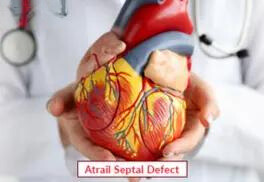
Atrial septal defect is a congenital heart defect where a hole exists in the atrial septum which separates the upper chambers of the heart. It allows oxygen-rich blood and oxygen-poor blood to mix. This condition may cause extra blood flow to the lungs and overloading heart. Generally, ASDs may not cause immediate symptoms, but larger defects can be a reason for serious complications over the time. So, if you experience an atrial septal defect (ASD), get early treatment and proper diagnosis to prevent long term heart problems. India has many advanced heart hospitals that offer cost-effective cardiac care to the local or internation patients.
Types of Atrial Septal Defect
- Secundum ASD: Secundum ASD is the most common type of atrial septal defect, which is in the middle of your atrial septum. It is the best with catheter-based ASD closure, which is a minimally invasive procedure with quick recovery.
- Primum ASD: This is found in the lower part of septum. It is typically associated with heart valve problems. Surgeons use this in open-heart ASD surgery for complete heart repair.
- Sinus Venosus ASD: It is a rare form of ASD which is close to the veins entering the heart. This type is also an ideal choice for catheter-based methods, but if it is not effective, then surgical intervention is necessary.
Causes of Atrial Septal Defect
There are no strong causes of ASD, but some factors may increase the risk which are given below:
- Genetic Disorders
- Chromosomal Abnormalities
- Family History
- Congenital Heart Defects
- Maternal Infections
- Holt-Oram Syndrome
Symptoms of ASD
The symptoms of atrial septal defect (ASD) may differ between children and adults.
- In Children:
- Lung Infection
- Difficulty in Breathing
- Difficulty in Feeding or Oral Activity
- Slow Growth
- Poor Weight Gain
- Fatigue During Play
- In Adults:
- Shortness of Breath
- Irregular Heartbeat
- Swelling in Legs or Abdomen
- Tiredness and reduced Exercise Capacity
Complications and Risks of ASD
- Pulmonary Hypertension: Excess blood flow to the lungs may increase pressure in the pulmonary arteries.
- Heart Failure: Due to extra workload, the heart may weaken. It can affect the heart’s pumping ability.
- Stroke Risk: The risk of stroke may be increased because ASD allows blood clots to pass through the heart and brain.
Diagnosis of ASD
- Echocardiogram: This is one of the common diagnostic tests for the heart. It provides detailed information with images of the heart structure, and detects the size and location of the defect.
- ECG: This test helps to identify abnormal heart rhythms and signs of the heart enlargement.
- Chest X-Ray: It shows the size of the heart and increased blood flow to the lungs.
- Cardiac MRI: It is used in rare or complex cases to get detailed information or images.
ASD Treatment Options
The size of the defect, the symptoms and the heart function assessment determine the required treatment method.
- Monitoring (Small Defects): Cardiologists need to conduct regular check-ups for small ASDs which may naturally close during childhood.
- Medications: The defect remains open because medications only treat symptoms which include irregular heartbeat and fluid buildup.
- ASD Closure:
- Catheter-Based (Device Closure): Doctors use this minimally invasive procedure for secundum ASD treatment which requires them to insert a catheter through a vein to reach the heart where they use a closure device to seal the hole.
- No large surgical incision.
- Hospital stay, which lasts 1 to 2 days.
- Patients to recover from their condition at an accelerated pace.
- Open-Heart Surgery:
- The procedure becomes necessary to fix extensive or complicated blood flow problems which include both primum and sinus venosus ASD. The surgeon uses stitches or a patch to repair the defect.
- The approach provides an effective and lasting solution which works for all types of atrial septal defects.
ASD Closure Procedure (Step-by-Step)
- The medical team conducts a complete assessment through medical evaluation and imaging tests.
- The patient needs to meet with a cardiac surgeon for assessment.
- The medical staff provides instructions which explain the required fasting and medication schedule.
- The procedure is conducted under general anesthesia.
- The medical team selects between two options which include catheter-based and surgical methods.
- The medical team uses either a closure device or a patch to close the defect.
- The patient needs to stay in the hospital for a period which varies between 1 to 5 days.
- The patient is able to return to light activities after one week.
- It takes several weeks for the patient to achieve complete recovery.
- Patients need to attend regular follow-up appointments which hold significant value for their health.
Why Choose India for ASD Treatment?
India is a leading country in the field of health and medicine. The hospitals have advanced technologies to treat atrial septal defect, and offer high quality care with low costs compared to the other developed countries.
- Experienced Cardiac Surgeons: India has highly skilled cardiologists who provide advanced ASD closure procedures with effective success rate.
- Advanced hospitals: Most hospitals have modern facilities and advanced technology, including cath labs, cardiac surgery units, safety features, and effective treatment options.
- Affordable Pricing: The cost of ASD treatment in India is very reasonable as compared to the Western and developed countries like USA, UK, or Europe. The foreign patients can save up to 70% on treatment costs without compromising quality.
Recovery & Aftercare
- Lifestyle changes:
- Follow the surgeon's instructions.
- Follow a heart healthy diet.
- Do regular activities as per the doctor's guidance.
- Avoid smoking and alcohol.
- Maintain a healthy weight.
- Follow-up care:
- Visit to the doctor according to the schedule.
- Take proper medications, if prescribed.
- Monitoring the heart and any complications
Success Rate of ASD Treatment
Most Indian hospitals and cardiologists have effective success rates in the heart surgeries and treatments. If patient got treatment from an experienced surgeon, there may the highly chance of success and quick recovery. Patients may return to their normal lives after successful surgery.
Note: For every surgery or treatment, the success rates depend on the patient’s age, health condition, and to some extent surgeon's experience.