

There are many couples who want to conceive and want to become parents. But they are not able to because of some reason. Infertility can affect individuals during their reproductive years, typically between 20–45 years, with higher risk after age 35. Most of the women face difficulty getting pregnant at this age. Due to this IVF technology, many couples get the chance to become a parent and more than 12+ million babies come to this world. In this blog, you will get to know about what are the 5 stages of IVF. There are some side effects that will help you to know things that show improvement in your embryo transfer and to know if you are prepared for IVF or not.
What is IVF?
IVF is commonly known for reproductive technology. IVF is a safe procedure in medicine and treatment. It will help to merge the sperm and egg then implant it in the uterus. IVF is not the first option that doctors recommend. Before this procedure, doctors prescribed birth control pills and estrogen. It will help to suppress the development of the ovaries, help synchronize cycle and maintain the time of the period’s cycle. IVF takes around 2 months to complete the successful procedure, apart from that, the standard cycle time is approx 4-6 weeks. Now, question arises how many IVF cycles are needed to get pregnant? Usually, 1-3 IVF cycles are needed to get pregnant, which depends on the age of patients. This data is associated with NICE (National Institute for Health and Care Excellence).
What are the 5 Stages of IVF?
IVF stands for In Vitro Fertilization. It is the hope for couples to have a baby or for those who are struggling for the baby. There are 5 stages of IVF. All these stages play an important role in increasing the chance of fertilization:
Stage 1: Ovarian Monitoring and Stimulation
This is the first stage in 5 stages of the IVF procedure. In this procedure, the doctor prescribes the hormonal injection or medicines to make ovaries release several eggs rather than one which is made every month. You need several fertility medicines to help the eggs to mature and prepare for the uterus to be fertilized. It takes almost 15 days to prepare the egg for fertility collection. During that time, the vaginal ultrasound is mandatory for 2 to 4 times and blood tests for the estrogen level. It helps to track the growth. Once they are sure that the size is correct that is measured by ultrasound then they can move further to the egg retrieval.
So the medicines you get at the starting of the procedure by injection and their purposes are:
- Gonadotropins: It helps to release multiple eggs and you have to take them daily to stimulate the ovaries.
- GnRH Agonists/Antagonists: It prevents ovulation prematurely.
- HCG Trigger Shot: It is the final thing to mature the eggs.
You can feel bloating, temporary mood swings and pelvic pain. Every woman responds to the ovulation stimulation according to their age, genetics and reproductive health. Doctors have to adjust medicines according to that.
Some tips that you should know:
- You have to take the injection at the same time daily and never skip it.
- You should be hydrating and avoid doing much exercise.
- If you are feeling any pain or breadless then you should go to your doctor.
Stage 2: Egg Retrieval
It is a doctor’s office procedure in which a woman has to stay for 1-2 hours, and the egg retrieval is done around 36 hours after triggering the final shot. But waiting for more than 36 hours can be risky in ovulation and it can lose some or all the eggs. This process takes 20 minutes to remove the multiple eggs. The follicle size is usually around 16 to 20 mm. This process can be risky so mild anesthesia is required. Then they place these eggs in a culture medium and after some time they add sperm to it for fertilization. After that, you rest for 1 or 2 hours and then leave for the home on the same day only. After this procedure, you can feel cramping or spotting for 24 to 48 hours and for that you will receive the medicine.
Some tips that you should know:
- Arrange the car ride to the home because after that you are not in the condition to go alone.
- You should eat light and avoid activities for 1 or 2 days.
- You should take antibiotics or pain relief medicine that your doctor prescribes you.
Stage 3: Sperm Collection/Retrieval
On the same day of the egg retrieval procedure, the doctor will ask for your partner’s sperm for a sample. In some cases, it needs to be harvested in advance and frozen. At some point it needs to harvest the sperm. It depends on health and infertility. In some cases, the surgery of sperm retrieval is necessary if there are some problems with sperm production.
Stage 4: Fertilization and Embryo Development
There are 2 methods to fertilize in IVF:
- They mix the healthy sperm and egg in a laboratory dish and leave it for an overnight to develop the natural fertilisation.
- They inject the sperm into a selected egg and make it overcome the male factor.
When the sperm and egg get mixed, the doctor has to wait for 20 hours to check if the fertilization is taking place or not. The fertilized egg has to grow in the lab for 6 days.
- In days 1 to 3, cells start to divide into 8 cells of embryo.
- By day 6, they came at the blastocyst stage and they were ready to transfer.
The embryos who reach this stage have maximum chances to get implantation. But if the egg is not found that means the egg is not fertilized and will not be able to develop an embryo.
Some tips that you should know:
- You should discuss about the blastocyst stage and number of embryo transfer to your doctor
- You should consider the test like semen DNA fragmentation.
Stage 5: Embryo Transfer
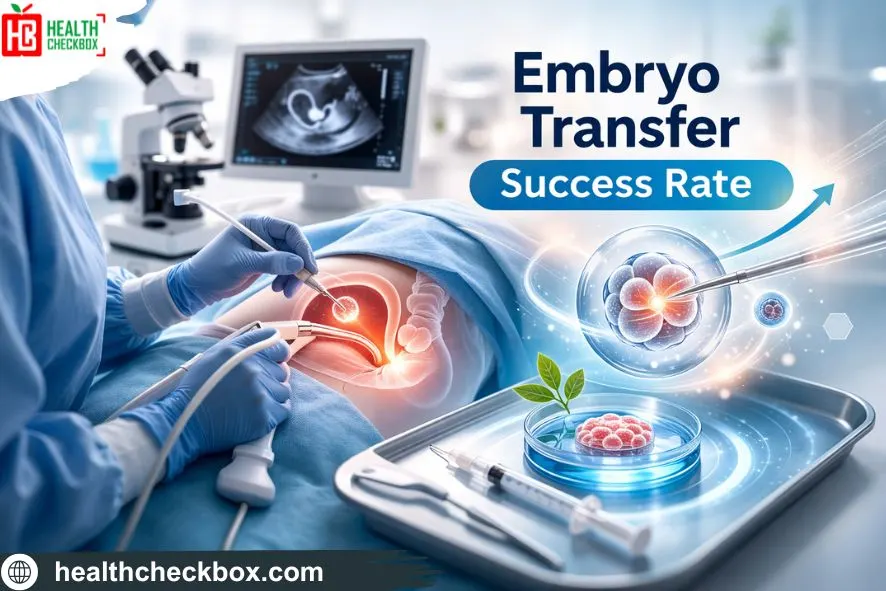
After 2 to 5 days of egg retrieval, you have to visit your doctor for the embryo transfer. In this process, doctors select the 2 or more embryos for transfer to the uterus according to their quality and patient factors. So at first, they insert the soft and flexible tube inside the uterus with the help of ultrasound guidance. In this process, anesthesia is not required so you can watch everything. Then the embryo is injected into your uterus. After the procedure, you can feel discomfort but you can do all your daily activities. But you should keep it in mind that you should avoid intercourse until your pregnancy test. Between the 2 weeks, your doctor does the pregnancy test to see if you are pregnant or not.
There are two types of Embryo Transfer: Fresh Embryo Transfer and Frozen Embryo Transfer. The method of the transfer is the same. But the differences are:
- Fresh Embryo Transfer: In this transfer, the embryo is inserted into the uterus in the 2 to 7 days. After the egg retrieval procedure.
- Frozen Embryo Transfer: In this transfer, the embryo that is created in the IVF cycle is frozen. Frozen embryos are thawed using controlled warming techniques, and then they are transferred to the uterus.
The chances of getting pregnant increases after the frozen embryo transfer.
Some tips that you should know:
- You should continue your medicines as you prescribed and don’t stop in the middle.
- You should relax your muscles.
Keep one thing in your mind that you can get pregnant at one time or maybe not. But the chances of getting pregnant have increased after the IVF procedure, which depends on the age, embrayo quality, and uterine lining.
How Long Does an IVF Cycle Take?
IVF cycles take on average 6 to 8 weeks from the starting of ovulation stimulation, egg and sperm collection to embryo transfer and pregnancy testing. It all depends on the treatment plan, conditions and the response of your ovaries.
What are the Side Effects of IVF?
There are many side effects of IVF in fertilized medicines during the ovulation stimulation phases:
- Vomiting
- Nausea
- Headaches
- Abdominal pain
- Bruising from IVF injection and discomfort
Some side effects of IVF happen after Embryo Transfer, so it is:
- Cramping
- Blotating
- Spotting
- Breast Tenderness
- Constipation
- Mood change
Prepare for IVF Procedure
Before the IVF treatment, you have to go through a medical and fertility test. And your partner will also go through it. There are some of the preparation for IVF like:
- At first, you should consult a doctor and they will guide you properly about the procedure.
- Checking for STIs or any other diseases.
- Test of ovaries, blood and urine.
- Instruction of taking fertility medicines.
- Sign the consent form.
- Search for the right hospital by looking at experienced doctors, success rate and patient reviews.
- Focus on your health by eating healthy and avoid alcohol and smoking.
- You should go with the emotional support of a group or consulting. Sharing others’ experiences provides comfort.
- IVF can be costly so you should manage the things financially.
Conclusion
I hope this blog helps you to understand the 5 stages of IVF. IVF Treatment at Apollo Hospitals India has a team of dedicated professionals to support you and care for you. Even if you are just beginning to explore fertility options or are actively pursuing treatment they are here to help you. The whole process takes 8 weeks to complete. So during that time, you should take a healthy diet, especially after embryo transfer. You should know foods to eat after embryo transfer, which will help you to improve your health.