




• appointment@healthcheckbox.com
  • +91 844 817 7919
  • appointment@healthcheckbox.com
  • +91 844 817 7919
HealthCheckbox
Book An Appointment
Menu
HealthCheckbox
  • Home
  • Treatments
  • Our Network
    • Doctors
    • Hospitals
  • About us
  • Testimonials
  • Contact us
Bone Conduction Hearing Aid product Image
Home ENT Bone Conduction Hearing Aid Treatment

Bone Conduction Hearing Aid Treatment

  • Description
Description

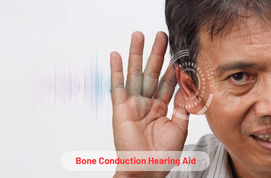
Hearing loss is a common problem that affects both children and adults. It occurs due to loud noises, trauma, ear infection, and other common symptoms. This problem can be temporary or permanent, which ranges from mild to severe. It leads to damage in the middle and outer parts if it is left untreated. The only possible treatment of this issue is bone conduction hearing aid or hearing systems. They are innovative technology devices that treat specific hearing losses in patients. These treatments are applicable for both surgical and non-surgical approaches. They were approved by the Food and Drug Administration (FDA). 

What is Bone Conduction Hearing Aid?

Bone-conduction hearing aids involve bone conduction to improve the outcomes of hearing loss. They are surgical implanted devices, which transmit sound vibrations in the middle or outer ear. This option is applicable for candidates with conductive, mixed, one-sided, profound hearing loss, etc. Its other name is Osseointegrated or bone-anchored hearing device. 

A bone conduction can be worn on your headband or it can be attached directly to your skin. It involves an external processor and surgical implantation as its main components. The bone conduction implants are of two kinds. These include the following:

  • Direct-Drive: The vibrations are transmitted directly through your skull bone. They are also known as percutaneous BCDs. The common examples of these implants are Baha and Ponto Systems. 
  • Skin-Drive: They transfer vibrations to your skin directly. These implants are also called transcutaneous BCDs. Baha and Sophono are their common examples. 

Types of Bone Conduction Hearing Aid

The types of hearing systems are as follows:

  • Surgically Implantable: This most common surgical bone-anchored hearing system involves a small titanium implant that can be placed behind your ears. Once the implant heals, an external process is fixed to restore your hearing. A processor can be removed while sleeping, showering or hair treatments. 
  • Non-Surgical: These hearing systems are typically recommended for children below 5 years of age or individuals without surgery requirement. Some bone conduction attaches to your skin with adhesives or they can be worn on your headband. 

Advantages of Bone Conduction Hearing Aid Treatment

Bone-anchored hearing systems provide several benefits. These include the following:

  • It is a good option for children since it doesn’t require surgery. 
  • This device provides better sound quality for individuals as the bone-conducting signal does not get dampened by skin. 
  • It is more comfortable and reduces the risk of skin irritation because there is no requirement of ear mold.

Serious Risks and Complications

Bone-anchored hearing aids lead to several complications if you are not selecting its right types. These are as follows:

  • Neuroma
  • Excess scar formation
  • Technical fractures
  • Chronic infection
  • Trauma
  • Failure of osseointegration
  • Skull paraesthesia
  • Persistent pain
  • Exposed bone

Conditions treated through Bone-Anchored Hearing Aids

These hearing systems are involved in treating different problems. They are as follows:

  • Middle ear dysfunction
  • Congenital atresia
  • Meniere’s disease
  • Sudden hearing loss
  • Single-sided deafness
  • Malformation of outer or middle ear
  • Chronic otitis media
  • Acoustic neuroma
  • Cholesteatoma

You can consult with your healthcare provider if you are an eligible candidate. They may refer an otolaryngologist for an evaluation of hearing loss. 

Bone Conduction Hearing Aid Treatment Procedure

  • A procedure takes 30 to 60 minutes depending on which type of hearing systems you received. 
  • During surgery, anesthesia will be provided, which keeps you more comfortable. It can be local or general depending on your situation. 
  • Next, a small incision is made behind your ear. After that, an otolaryngologist creates a small hole and place a small titanium implant in your mastoid bone. It should be measured between 3 to 4 mm in diameter, which is about a half size of your pea. 
  • Once an implant gets placed, an abutment (connector) can be attached for skin-healing process. After this procedure, your incision is closed with stitches, and it is placed with surgical dressing. 
  • These systems depend on osseointegration. Your bone provides stability when it fuses to the titanium implant. The sound processor can be attached to this external connector, which leads to the occurrence of this fusion. A type of hearing system and body’s healing capacity determines your healing times. In general, this process takes one to three months. 

How to Prevent Complications Occurring due to Bone-Anchored Hearing Aids?

The complications with these hearing systems are prevented in the following ways:

  • You can wear your helmet while playing contact sports or riding two-wheelers. This lessens your risks of head trauma, which can lead to infection, impairment, etc. 
  • An otolaryngologist or audiologist must choose a relevant candidate for this treatment. Avoid selecting people with sensorineural hearing loss. 
  • You must clean your skin around your implant and abutment. The skin infections and chronic pain are also monitored for caring processes. 
  • It is important to avoid certain health conditions, which affects your bone formation. They can be osteoporosis, Paget’s disease, etc.
  • You must choose a minimally invasive procedure for the treatment. This leaves your skin, nerves, and blood vessels intact. 

Our Other Services

  • Vaginal Childbirth product Image Vaginal Childbirth Treatment
  • Reduction Clitoroplasty product Image Reduction Clitoroplasty
  • Liver Cancer product Image Liver Cancer Treatment
  • DNB General Surgery product Image DNB General Surgery
  • Chemotherapy product Image Chemotherapy Treatment
  • Labia Surgery product Image Labia Surgery
  • Assisted Hatching product Image Assisted Hatching Treatment
  • Elbow Arthroscopy Surgery product Image Elbow Arthroscopy Surgery Treatment
  • Laser Hair Removal product Image Laser Hair Removal Treatment
  • Glaucoma Surgery product Image Glaucoma Surgery

Latest Health Tips

Blood Cancer Symptoms-blog img
08 Jan
Health Tips

Blood Cancer Symptoms: Early & Stages-Wise Symptoms

  • March 31, 2026
  • By author-avatar Dr Areeb Zafar Hashmi
One of the most threatening diseases in today's life is blood cancer...
Continue reading

How Long Can You Survive Breast Cancer Without Treatment-blog img
14 Nov
Health Tips

How Long Can You Survive Breast Cancer Without Treatment?

  • March 31, 2026
  • By author-avatar Dr Areeb Zafar Hashmi
Breast cancer is one of the major cancer diseases in the world. It a...

Continue reading

13 Nov
Health Tips

Stages of Stomach Cancer

  • March 31, 2026
  • By author-avatar Dr Areeb Zafar Hashmi
Stomach cancer, also known as gastric cancer, is a serious disease t...

Continue reading

Prostate Cancer Symptoms-img
06 Nov
Health Tips

Understanding Prostate Cancer Symptoms

  • March 31, 2026
  • By author-avatar Dr Areeb Zafar Hashmi
Prostate cancer is a major global health problem. According to the G...

Continue reading

Oral Cancer Symptoms-blog img
31 Oct
Health Tips

Oral Cancer Symptoms: Early Warning Signs

  • March 31, 2026
  • By author-avatar Dr Areeb Zafar Hashmi
When cancerous cells develop in the mouth or throat, it is known as ...

Continue reading

Anal Cancer Treatment Cost in India-blog img
18 Oct
Health Tips

Anal Cancer Treatment Cost in India

  • March 31, 2026
  • By author-avatar Dr Areeb Zafar Hashmi
Anal cancer rarely occurs, but it's a serious one, and it requires i...

Continue reading

Bile Duct Cancer Treatment Cost in India-blog img
16 Oct
Health Tips

Bile Duct Cancer Treatment Cost in India

  • March 31, 2026
  • By author-avatar Dr Areeb Zafar Hashmi
The intestine, gallbladder and the liver are all connected by the sm...

Continue reading

Bone Cancer Treatment Cost in India-blog img
13 Oct
Health Tips

Bone Cancer Treatment Cost in India

  • March 31, 2026
  • By author-avatar Dr Areeb Zafar Hashmi
A bone cancer can be a life-threatening disease for some people. In ...

Continue reading

Submit Your Enquiry

    IMPORTANT LINKS
    • Home
    • Treatments
    • Testimonials
    • About us
    • Contact us
    • Privacy Policy
    • Terms & Conditions
    • Refund and Cancellation Policy
    IMPORTANT TREATMENTS
    • Anal Cancer Treatment
    • Bile Duct Cancer Treatment
    • Bladder Cancer Treatment
    • Blood Cancer Treatment
    • Bone Cancer Treatment
    • Brain Cancer Treatment
    • Breast Cancer Treatment
    • Car T-Cell Therapy
    • Cervical Cancer Treatment
    Latest Posts
    • Effects of Stress on the Body: Physical Symptoms & Health Risks
    • How to Treat Dry Eyes: Home Remedies, Eye Drops & Medical Care
    • Sickle Cell Disease vs Anemia: Symptoms, Causes & Treatment
    • Spinal Decompression Exercises at Home for Back Pain Relief
    • Cost of Hip Replacement Surgery in Bahrain
    Contact Us

    appointment@healthcheckbox.com

    Phone No:
    +91 844 817 7919

    Address:
    E-21C, Sector-8, Noida, UP-201301, India

    Trustpilot
    ©️ HealthCheckbox.com | Operated by AYUSHMITA HEALTHCARE PRIVATE LIMITED.
    payments
    • Home
    • Treatments
    • Our Network
      • Doctors
      • Hospitals
    • About us
    • Testimonials
    • Contact us

    Book Appointment

      Facebook X Instagram YouTube linkedin WhatsApp WhatsApp
      Chat Icon
      Book An Appointment