

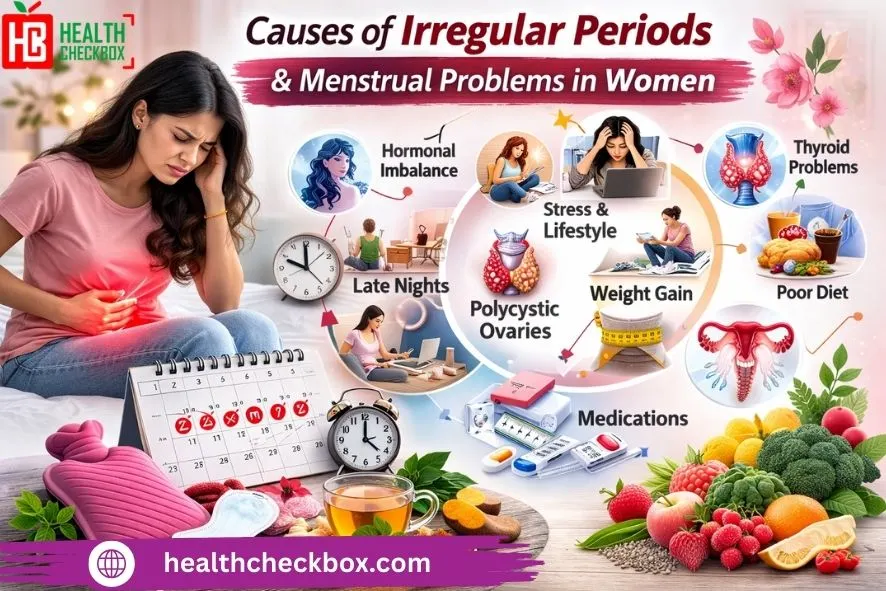
Menstruation is a natural and important process in women’s bodies, which is considered as an important factor for overall health and well-being. A healthy menstrual cycle usually occurs after every 21-28 days and it lasts for 5-6 days. The menstrual cycle is measured as the number of days between the first day of periods of one cycle and the menstrual bleeding of the next cycle. A regular menstrual cycle reflects the normal functioning of the reproductive system of the women. However, many women experience irregular periods or menstrual problems at some point. Before going to take any treatments or medications, consult a gynecologist, because gynecology and endocrinology address the ovulation cycle and the female reproductive system. Causes of irregular periods and menstrual problems in women are diverse and often interconnected.
Many women end up under stress which affects their physical health and also their peace of mind because of irregular periods. Irregular periods refer to missed periods, heavy bleeding or light bleeding. Menstrual irregularities can have a variety of causes which include pregnancy, hormonal imbalances, infections, etc. Understanding the causes of irregular periods and /menstrual problems in women is essential for early diagnosis, effective treatment and prevention of complex situations. This blog will help you to know the hormonal causes of irregular periods in women, symptoms, the role of a gynecologist, diagnosis, treatment, prevention, and health tips.
What are Irregular Periods?
Irregular periods are menstrual cycles which vary in length and timing. The average gap between the periods is sometimes shorter than 25 days or longer than 35 days. This irregularity happens because of various biological factors that affect fertility and the natural flow of daily life. Irregular periods don’t follow a typical pattern like:
- Come earlier than expected
- Come later than expected
- Be shorter than usual
- Be longer than usual
Most common menstrual irregularities include:
Oligomenorrhea
Oligomenorrhea is an abnormal menstrual disorder. This involves infrequent periods more than 35 days & this condition can be a sign of underlying health issues. Women can experience menstruation for less than nine periods in a year. Causes of Oligomenorrhea are infectious, genetic, perimenopause, lifestyle, nutrition, thyroid disorders and many more. Irregular bleeding, changes in menstrual flow, mood swings or emotional issues can be some of the symptoms of Oligomenorrhea. This can be controlled with regular check ups, vaccinations, hygiene maintenance that prevent infections, hormonal therapy, weight management, and many more.
Amenorrhea
Amenorrhea is the absence of periods for more than one menstrual cycle. There are two types of amenorrhea: Primary and Secondary. Primary amenorrhea is considered for those who have not had their periods by the age of 15 & Secondary amenorrhea is considered for those whose menstruation is missed by three or more than three times. Milky nipple discharge, headache, hair loss, vision changes, pelvic pain, acne, and excess facial hair are some of the symptoms of amenorrhea. Pregnancy, breastfeeding, menopause, PCOS, and pituitary tumors are the causes of this menstrual abnormality.
Menorrhagia
In menorrhagia, women can face heavy or long menstrual bleeding that lasts for over 7 days. It requires changing of a pad or tampons on regular hours. This abnormality can affect daily life. Heavy menstrual bleeding can be the toughest time for a woman to do usual activities. Soaking through more than one sanitary pads every hour, needing a double sanitary napkin to control menstrual flow, bleeding for more than one week, passing blood clots larger than a quarter and many more are the symptoms of menorrhagia. PCOS, thyroid issues, uterine fibroids, polyps, bleeding disorders and many more are considered as some of the causes of menorrhagia.
Polymenorrhea
Polymenorrhea is a menstrual abnormality in which the menstrual cycle is continuously less than 21 days for every month. This can be caused by some specific medical conditions which include abnormal vaginal bleeding that affects ovulation and fertility in women. It can be caused due to Shorter follicular phase, shortened luteal phase, stress, perimenopause, thyroid problems. Frequent or irregular periods which occur after every 15-20 days are some of the symptoms of Polymenorrhea.
Hormonal Causes of Irregular Periods and Menstrual Problems in Women
Menstrual irregularities have different causes, including pregnancy, hormonal imbalances, infections, diseases, trauma and certain medication also.
Perimenopause
In this irregularity, ovaries begin to produce fewer hormones, and ovulation becomes erratic which causes irregular periods because of unpredictable fluctuations in estrogen and progesterone. It is a time before menopause when a woman’s body gets ready to have periods which is also known as menopausal transition.
PCOS
Polycystic ovary syndrome (PCOS) is a common hormonal disorder which affects 1 in 10 women. It is a common condition in women’s childbearing age. Some of the causes of PCOS are excess insulin resistance, hormonal imbalance, and genetic predisposition. Irregular/infrequent menstrual periods with PCOS may raise the risk for endometrial hyperplasia or endometrial cancer, thyroid issues.
Stress
One of the main causes of irregular periods in women is stress, which releases the cortisol and adrenaline. Stress increases the cortisol levels which unbalances the blood sugar, resulting in disturbances in the ovulation and periods. High stress levels suppress the hormones that are essential for ovulation. Chronic stress can be one of the reasons which lead to thinner uterine lining which can cause missed and painful periods.
Eating Disorders
When someone is not eating enough, the body loses its energy and causes energy deficiency & to protect important organs like the brain and heart. The body pauses ovulation to conserve energy. This results in delay of menstruation or irregular periods. Inappropriate nutrition leads to deficiency in gonadotropin which causes a drop in follicle stimulating hormone and luteinizing hormone.
Breastfeeding
Breastfeeding regulates ovulation and menstruation and breastfeeding can be considered as one of the physiological causes which directly affects the menstrual cycle through hormonal changes. Because when a mother breastfeeds, her body produces a higher level of prolactin which is responsible for milk production. This suppresses ovulation which delays the menstrual cycle. This condition is known as lactational amenorrhea.
Pregnancy
Pregnancy causes irregular or absent periods because the body stops shedding the uterine lining to support the developing fetus. The body produces a significant amount of progesterone and human chorionic gonadotropin. This is responsible for maintaining the uterine lining for the fetus which prevents menstruation.
Medications
Medications are also one of the causes of irregular periods/abnormal menstruation in women. It disrupts the hormonal balance which is required for a regular cycle. Antipsychotics and antidepressants are some of the medications which raise the levels of prolactin to stimulate milk production and can stop menstruation. Long term steroids can disrupt hormones which can cause irregular periods. Blood thinners can lead to heavier or unpredictable bleeding. There are many medications and prescriptions which include hormonal birth control, chemotherapy and steroids which can lead to heavier, lighter or delayed periods.
Lifestyle-Related Causes of Irregular Periods in Women
Irregular menstrual periods are a common concern among women of reproductive age and are also affected by lifestyle related factors. Lifestyle related factors are major contributors to irregular menstrual cycles. This affects the hormonal balance which is essential for regular ovulation and menstruation. Modern lifestyle pattern which include poor dietary habits, high stress levels, disturbed sleep cycles, which can interfere with the body’s hormonal balance. By understanding these lifestyle factors in menstrual irregularities is important which helps in better reproductive health and overall well-being.
Chronic Stress
Chronic stress is a consistent sense of feeling pressured and overwhelmed over a long period of time. High stress levels directly impact the hypothalamus which can suppress ovulation and can cause missed or delayed periods. In chronic stress, Hypothalamic pituitary adrenal gets activated which can cause irregular menstruation. Chronic stress increases cortisol production which interferes with the hypothalamus of the brain.
Weight Fluctuations
Weight fluctuations are normal, temporary, daily ups and downs in body. These changes affects in water weight, food intake, waste, and hormonal levels. High salt or carbohydrate consumption can cause the body to hold more water which affects in weight fluctuations. Drastic weight change, rapid loss or gain or maintaining a high body mass index can also disturb hormonal signals.
Excessive or Intense Exercise
Excessive or intense exercise can disturb the normal menstrual cycle which leads to irregular periods. One major cause is low energy. When a person exercises intensely without consuming calories a body needs, then the body goes in energy conservation mode. This results in reduction of gonadotropin-releasing hormone (GnRH) from hypothalamus. Regular exercise is beneficial for overall health but without nutrition and rest it can affect hormonal balance and menstrual health which can result in irregular periods or menstrual problems.
Poor Nutrition
Poor nutrition can create a major impact on the menstrual cycle. Periods are linked to overall hormonal and physical health. Intake of poor calories is one of the major ways of poor nutrition. With low calorie intake, the brain reduces the production of hormones such as GnRH which is essential for stimulating ovulation. Without regular ovulation, periods can become irregular. High consumption of processed food and sugar can result in insulin resistance. Poor nutrition can affect body weight. Excessive body fat can also be the reason for poor nutrition as it causes estrogen levels too high which can affect irregular period cycles.
Sleep Disturbances
One of the most common effects for irregular periods is poor sleep pattern or sleep disturbances. Sleep plays a crucial role in regulating hormones which control the menstrual cycle. When sleep is disturbed because of insomnia, shift work, stress or poor sleep quality, hormones get affected very easily. Poor sleep affects melatonin level which are responsible for regulating sleep. Sleep disturbances increase the cortisol levels which is commonly known as stress hormone. This can result in triggering the hormonal cycle which affects delay periods.
Smoking and Alcohol Consumption
Nicotine and other chemicals present in cigarettes affects menstrual irregularity. It also affects the release of reproductive hormones such as estrogen, progesterone, luteinizing hormone and follicle stimulating hormone. This imbalances the hormone which results in delayed periods. Smoking also reduces blood flow to ovaries and uterus which creates an impact on normal functioning of a body. Long term smoking is linked to earlier onset of menopause which increases the risk of menstrual disorders.
Alcohol consumption affects irregular periods by interfering with the endocrine system. It affects the hypothalamus and pituitary gland, which controls the hormonal production in the ovaries. Excessive consumption of alcohol intake suppresses the release of LH and FSH, which prevents proper ovulation. Chemicals present in items of smoking and alcohol increase the oxidative stress, damage reproductive tissues and worsen hormonal instability. Also, extreme uses of these can lead to irregular periods, heavier bleeding and fertility problems.
Travel Changes
Travel can affect the periods sometimes because the human body is highly sensitive to changes in lifestyle. One major factor of travel for delay periods is Circadian Rhythm. Travelling across time zones, long time flights can disturb the body’s internal clock which induce physical and emotional stress because of tight schedules, unfamiliar environments, and accomodations. Short-term travels sometimes can be the cause of period irregularities.
Symptoms of Menstrual Irregularities
Irregular menstrual cycle refers to variations in the length, timing, flow and symptoms of menstruation. Symptoms of an irregular menstrual cycle can appear in different ways. It affects a person both physically and emotionally. Symptoms should be checked by a healthcare professional to identify and manage the conditions. Some of the common symptoms for menstrual problems are given below:
Spotting Between Periods
Potting between periods is a light vaginal blood flow in pink/red/brown in colour which is caused by hormonal fluctuations or contraception.
Light Bleeding or No Bleeding
It is caused by hormonal fluctuations, significant stress, lifestyle changes, hormonal contraceptives and specific conditions. Light bleeding is commonly caused by pregnancy, stress, birth control changes and certain other conditions. High stress, extreme weight loss, or excessive exercise can also be considered as the reason for no bleeding or skipped periods.
Severe Cramps in the Belly
This indicates conditions such as secondary dysmenorrhea. It is considered as a usual medical discomfort. One of the common conditions in cramping is Endometriosis. In Endometriosis, tissue of the uterus grows outside the uterus, which causes severe pain and irregular bleeding.
Breast Tenderness
This issue happens because of fluctuating levels of estrogen and progesterone. This results in causing swelling and sensitivity which results in irregular periods. When estrogen and progesterone levels rise it causes milk ducts which leads to swelling and tenderness.
Bleeding After Sexual Intercourse
It indicates underlying issues like cervical inflammation, hormonal imbalances, and vaginal infections. It is caused by hormonal imbalance, vaginal dryness and also certain medical changes. Hormonal fluctuation can be considered as one of the reason for the combination of bleeding after intercourse and irregular periods.
Heavy Bleeding With Blood Clots
Polycystic ovary syndrome, fibroids, endometriosis, adenomyosis and pelvic inflammatory disease like conditions can affect women’s womb or ovaries which makes bleeding more easily. This can be the reason for heavy menstrual bleeding with blood clots during periods.
Discomfort in the Bladder or Rectum
This can be the reason because pelvic space allows physical pressure from adjacent organs to affect the uterus and ovaries. Fibroids, severe endometriosis, and PID are some of the conditions which can cause urinary discomfort.
Regular Menstrual Headaches/High Fever
Estrogen and Progesterone hormones may affect headache related chemicals in the brain. Regular menstrual headaches can be a symptom of underlying hormonal fluctuations which can be the direct reason for irregular periods. Drop in hormones can cause hormonal imbalance right before menses which creates headache/migraine attacks. Fever can also be the reason for delay in periods/irregular menstrual cycle. When the body prioritizes fighting infection over menstrual cycle, it can cause irregularity in periods. When a female gets high fever, the hypothalamus’ hormone gets affected which results in delay in periods.
Foul Vaginal Discharge
Foul vaginal discharge can be the reason for irregular periods. Infections such as PID, bacterial vaginosis which creates fishy odor can affect the reproductive organs which leads to painful or irregular periods.
Mood Swing
Mood swings can happen because of fluctuating hormone levels, shifts in estrogen and progesterone. This can create emotional distress, anxiety, irritability and depression which can also be the symptoms of menstrual irregularities.
Medical Conditions Affecting Menstrual Cycles
Menstrual cycles affect medical conditions which include hormonal imbalances, structural issues, systemic disease which cause irregular, heavy or painful periods. Conditions like PCOS, thyroid disorders, uterine fibroids, endometriosis, pelvic inflammatory disease which impacts the regularity of periods. One of the common conditions is PCOS which causes irregular periods in women/females. Thyroid disorders play a major role in affecting menstrual cycles. Hypothyroidism is an underactive thyroid and Hyperthyroidism is an overactive thyroid. This can affect the hormones resulting in heavy, light, irregular or missed periods.
PID (Pelvic inflammatory disease) is one of the infections of female reproductive organs which can cause abnormal uterine bleeding and pain. It can lead to long-term reproductive complications. Chronic illness which includes diabetes, eating disorders, autoimmune disease which can also affect menstruation by disrupting overall hormonal regulation. Endometriosis is another common condition which affects menstruation. Endometriosis is another condition in which the inflammation and scarring associated with endometriosis can worsen menstrual cycles and symptoms. Extreme stress, excessive stress, and significant weight changes can suppress ovulation. This can lead to missed or irregular periods.
Understanding these medical conditions is important for individuals. Changes in the menstrual cycle can play a role as early indicators of underlying health issues which require medical evaluation and treatment.
When to See a Doctor?
Consult a doctor/gynecologist if you experience severe pain, heavy bleeding which requires changing of a pad every 1 hour or cycles are consistently shorter than 21 days or longer than 35 days. If periods are consistently irregular for several months, suddenly stop without any obvious cause or occur more earlier than one’s individual menstrual cycle, then medical evaluation is recommended. Early medical indication not only helps to manage symptoms but also supports long-term reproductive and overall health.
No periods for three months excluding pregnancy, may indicate PCOS, thyroid issues, stress, heavy bleeding, pelvic pain, irregular vaginal discharge, unexplained weight loss/gain, hair loss or excessive hair growth, inability to conceive, sudden changes in body, are some of the key factors that one should consult a doctor.
Treatment and Diagnosis for Period Irregularity
Treatments for menstrual irregularities are based on the type of irregularity and certain lifestyle factors which are treated through medical history, pelvic exams, blood tests and ultrasound. It is done to identify causes such as PCOS or thyroid. In most cases, a gynecologist may advise few of the following:
Lifestyle Changes
- Balanced Diet: A healthy diet helps in regular periods. It focuses on a whole or nutrition rich diet which helps in balancing the hormones. Regular exercise also help in reducing weight or managing weight.
- Stress Management: Adding regular exercise, yoga practice, meditation which lowers cortisol levels and balances hormones. Utilizing deep breathing exercise techniques can be considered which reduces stress and improves menstrual regularity.
Medications
- Hormonal Therapy: Hormonal treatments like birth control pills or patches which provide steady levels of estrogen and progesterone. This helps in managing heavy bleeding. Metformin is one of the medicines which can be used for PCOS to manage insulin resistance.
- Pain Relievers: Ibuprofen or naproxen like pain relievers can be taken during extreme pain of periods. NSAIDs like ibuprofen can reduce pain and bleeding, always consult a doctor before high doses. A heating pad or hot water also provides better relief during periods.
Surgical Interventions
- Pelvic Ultrasound: A pelvic ultrasound for ultrasound is a safe, painless test which is used to examine the uterus, ovaries. It detects PCOS, also used to identify structural issues like uterine fibroids, polyps or ovarian cysts. It helps in investigating pain or bleeding like evaluation of chronic pelvic pain, fertility issues.
- Endometrial Ablation: Endometrial ablation is a minimally invasive procedure which destroys the uterine lining which is used for irregular menstrual bleeding or irregular menstrual cycle treatment. It is used to treat the reduction of bleeding which is necessary to regulate the cycle.
- Myomectomy: Myomectomy is used to remove uterine fibroids while preserving uterus which cause heavy, painful, or irregular periods. By this treatment, it reduces pelvic pressure and anemia which improves the chances of conception.
- Hysteroscopy: Hysteroscopy is used for diagnosing and treating conditions like abnormal bleeding, infertility, polyps, and fibroids.
- Uterine Artery Embolization: Uterine artery embolization is a procedure which is used to block blood supply to fibroids. It is a procedure to treat symptomatic fibroids or adenomyosis by blocking blood flow.
Home Remedies for Irregular Menstruation
Natural or home remedies are the best options to get periods immediately.
- Ginger Tea helps in reducing pain, swelling and supports menstrual cycles.
- Warm milk with cinnamon helps in improving menstrual cycle consistency and hormonal regulation.
- Drinking enough water or by keeping the body hydrated helps in reduction of bloating and supports overall health.
- Turmeric helps in regulating hormones and reduces pain during periods as it contains anti inflammatory properties.
- Consumption of a healthy diet which is rich in fruits and vegetables, omega-3s helps in promoting hormonal balance.
Note: Sometimes, these foods can delay your periods, so consult your gynecologist before eating any.
Prevention/Menstrual Health Tips
Menstrual health is an essential part of women’s overall well-being. Here are some tips that can help in preventing irregular periods.
- Proper cleansing
- Comfortable Clothing
- Maintain healthy BMI
- Hydration and diet
- Treat thyroid/PCOS early
- Medical Advise
- Avoid Perfumed products
- Hand Hygiene
- Regular Exercise
Conclusion
In this blog, I’ve tried to clear out all the points related to the causes of Irregular Periods and Menstrual Problems in Women. Irregular periods and menstrual problems are common issues among women. It can occur in a huge range of hormonal, medical and lifestyle related factors. By understanding the causes and symptoms of period irregularities allows females to know early warning signs of underlying health issues. Keeping a menstrual cycle as a priority empowers women to take control of their reproductive health and enhances their physical, emotional and psychological quality of life.