

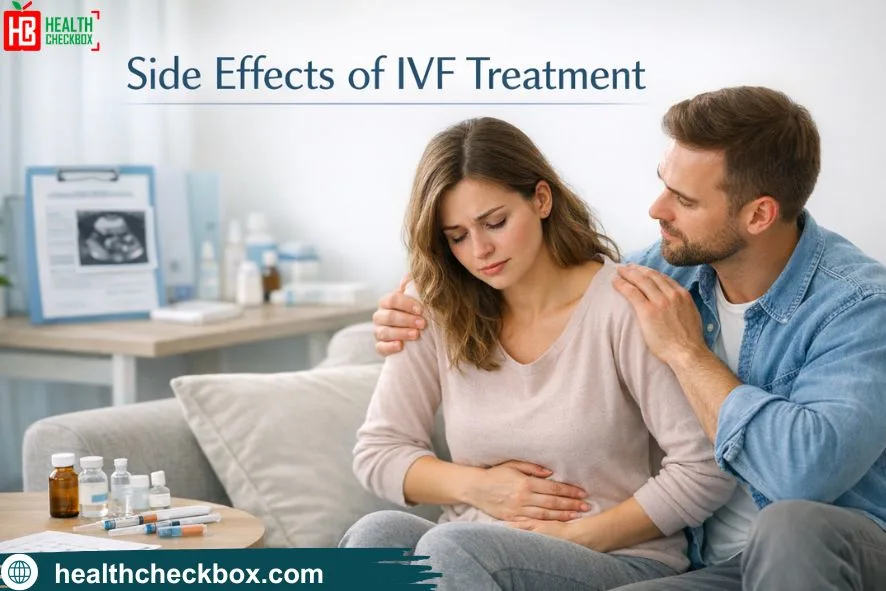
IVF has become one of the widely used assisted reproductive technologies for couples nowadays. This treatment has helped thousands of couples to achieve their dream of becoming parents. It is commonly recommended for conditions like blocked fallopian tubes, ovulation disorders, male factor infertility, unexplained infertility and many more. Apart from its benefits, there are some risks of IVF treatment which affects emotionally, physically and mentally as well. Some of the couples or individuals tolerate the treatment but some experience moderate to serious discomfort during the IVF process. Bloating, headaches, breast tenderness, fatigue, etc, are some of the side effects that may occur during or after IVF treatment.
Most of the side effects of IVF are temporary and can be managed. But, there are some rare effects which become serious complications for the patients such as OHSS, multiple pregnancies, etc. Understanding the common side effects of IVF is important for patients to make proper decisions and proceed with the process with confidence. Below, we will understand common side effects of IVF treatment in more detail and how it can be managed effectively.
What Happens During IVF Treatment?
IVF treatment is a multiple-stage process. There are 5 stages of IVF treatment, including ovarian stimulation, egg retrieval, fertilization, embryo culture, and embryo transfer. During the first stage, hormonal injections are given to produce multiple eggs. This increases the number of eggs & chances of success. When eggs mature after some days, then they are collected from ovaries. Eggs are retrieved from the ovaries using a thin needle guided by transvaginal ultrasound. After this process, mature eggs and washed, prepared sperm are mixed together and placed in a medium.
Then, stage-4 comes in which fertilized eggs are nurtured in a controlled environment which supports natural development from a zygote to blastocyst stage. After this, when the embryo matures, it is kept under observation. This results in the selection of high quality embryos for transfer. In the final step, Embryo transfer takes place. A fertilized embryo is placed in the woman’s uterus which results in achieving pregnancy.
IVF is a difficult medical process which helps many couples to build their families. With the help of advanced technologies and medication, IVF provides hope to every couple facing infertility. Factors affecting IVF success rates include patient age, infertility diagnosis, embryo development status and medical center staff proficiency. The success rates of IVF in women below 35 years of age exceed the success rates of women above 40 years of age.
Common Physical Side Effects of IVF Treatment
Apart from any medical process, there are some side effects and risks of IVF Treatment. Here are five common physical side effects of IVF.
- Abdominal Bloating: They are mainly caused by enlarged ovaries because of stimulation, medications and egg retrieval also. This also leads to swelling & discomfort.
- Breast Tenderness: This happens because of increased level of progesterone in the body which causes breast tenderness. Due to this, breasts become sore, lumpy or heavy.
- Mood Swings: These happen because of fertility medications and pregnancy which results in hormonal imbalance. The hormonal changes result in being too emotional, crying, easily or nervous.
- Headaches: This happens because of hormonal changes happening in the body. Hormones fluctuate due to shifts in the estrogen levels during stimulation.
- Spotting & Light Vaginal Bleeding: This may happen because of implantation and hormonal changes due to medications or cervical irritation. This appears as pink, red or brown discharge. If it becomes heavier, then one should consult a doctor.
Emotional and Psychological Side Effects
The impact of IVF affects the women in both ways, physically & mentally. A woman proceeding for the IVF process deals with several emotions. This could be from hope and excitement to disappointment and frustration. Here are some of the emotional and psychological side effects mentioned below:
- Stress and Anxiety: Hormonal injections, monitoring appointment, egg retrieval, etc, such stages cause fear of miscarriage, financial stress, tension about medical procedures. This sometimes results in stress and anxiety.
- Depression: Because of unsuccessful pregnancy and long journey there is continuous sadness, loss of motivation which causes depression.
- Relationship Strain: Couples face financial burden, blame or guilt about infertility, less sexual intimacy or repeated IVF attempts.
- Emotional Sensitivity: During IVF process, hormonal medications affect mood which results in irritability, immediate sadness or crying, feeling emotionally overwhelmed, etc.
- Social Withdrawal: Some couples keep their treatment private. But after several failures of IVF cycles, couples sometimes stop talking to family and friends because they feel that their pain is not fully understood. Pregnancy announcements from others can be painful emotionally.
Serious Risks and Complications of IVF Treatment
Sometimes, IVF may increase the risk of certain short-term complications, although serious risks are relatively rare. Here are some of the risks of IVF treatment:
- OHSS: It is a serious complication which occurs due to IVF treatment. OHSS occurs when the ovaries respond excessively to fertility medications used during ovarian stimulation. Women sometimes experience belly pain, bloating, upset stomach, & diarrhea because of this issue. Sometimes, OHSS also results in sudden increase in weight and shortness of breath.
- Multiple Pregnancies: Sometimes, IVF increases the risk of more than one pregnancy at the same time. Chance of high blood pressure and diabetes increases after having multiple pregnancies at the same time. Early labor & delivery, low birth weight, and increased health risks for the mother are also the reasons for multiple pregnancies.
- Ectopic Pregnancy: This is considered as a serious condition which happens when embryo implants outside the uterus. This requires immediate attention & medical care. The embryo cannot survive outside the uterus which results in no pregnancy.
- Egg Retrieval & Anesthesia Risks: This is considered a safe process but sometimes leaves a small risk which causes bleeding, infection or reaction.
- Ovarian Torsion: This is a rare & serious issue which happens when the ovary twists itself. This cuts the blood supply which results in severe abdominal pain suddenly. This may need surgery to cure.
How to Manage IVF Side Effects & Risks of IVF Treatment ?
There are some of the side effects of IVF treatment which stays for a shorter period of time. This can be managed easily by changing daily lifestyle habits, staying consistent, and removing these effects from our bodies. Some of the ways to manage these effects given below:
- Drink lots of water to keep your body hydrated. This helps to reduce bloating and discomfort.
- Eat the best foods to increase fertility like fruits, vegetables, eggs, whole grains, etc. This may also helps in hormonal balance and keep the body healthy.
- Try to take counseling sessions for emotional support.
- Do meditation and yoga to keep your hormonal balance.
- Simple exercise helps to remove stress and improve circulation in the body.
- Visit a doctor for regular checkups and blood tests to track progress safely.
- Take good sleep to avoid anxiety, stress & depression like problems.
- Try to avoid caffeine related products and alcohol
- Avoid High-intensity exercise
- Don’t Smoke
When to Call Your Doctor?
When you notice these signs, visit your doctor immediately.
- Vomiting
- Shortness of Breath
- Rapid weight gain
- Swelling in body
- Chest Pain
- Heavy vaginal bleeding
- Blood clot symptoms
- Abdominal Pain
- Reduced Urination
Conclusion
IVF is an advanced medical procedure which brings positive change into the lives of many couples & individuals. But, it also comes with some side effects. In this content, we’ve helped to understand various risks and side effects of IVF with its treatment. This will help you to make informed decisions and monitor your health during and after the treatment.