

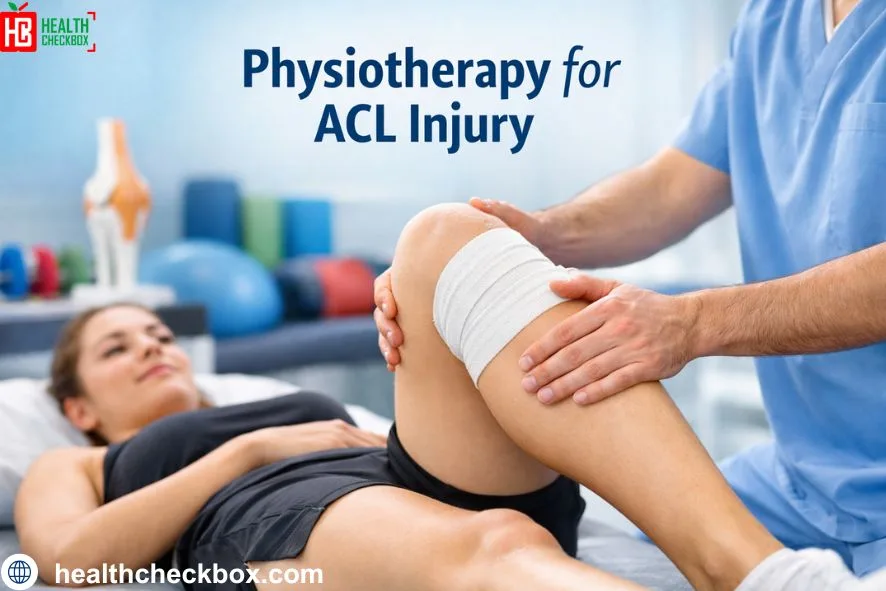
ACL (Anterior cruciate ligament) injuries are the most common and serious knee injuries. It mainly affects athletes and physically active persons. The ACL is an important ligament which balances and fixes the knee joint. When this ligament is stretched and torn because of some twisting movement, it creates problems. In this scenario, physiotherapy for ACL injury plays an important role in restoring knee strength, flexibility, etc. This can improve the chances of patients to return on their daily life routine as soon as early.
Physiotherapy and structured ACL rehabilitation exercises are important for a successful recovery from an ACL injury. This not only helps to reduce pain but it also rebuild strength and confidence in the knee joint. Physiotherapy for ACL injury includes proper training which helps the body’s ability to sense joint position and movement.
Understanding ACL Injuries
An anterior cruciate ligament(ACL) injury is an over-stretching of the knee which mainly occurs during sports. ACL injury happens due to sudden stops or changes in the direction like jumping or landing in basketball, football or downhill skiing, etc. ACL is a ligament which stabilizes the knee joint by connecting the thigh bone to the shin bone. When this ligament is stretched or torn due to sudden twisting movements, it leads to pain, swelling, instability, etc. There are 3 types of ACL injuries:
- Grade One: This is a low, stretched ligament which still holds your knee bone together.
- Grade Two: A partial tear with medium, unstable damage.
- Grade Three: This is a complete tear in which the ACL breaks into two pieces. It is also known as ACL tear.
Symptoms of ACL injury:
- A feeling of a ‘Popping’ sound at the time of injury.
- Swelling
- Feeling of pain when you put weight on your knee
- Reduced Range of motion
Causes of ACL injury:
- If you get a very hard hit on the side of your knee like during sports activities, any physical movement, etc.
- Accidents
- Direct contact on the side of the knee such as tackle in football, etc.
- Landing from a jump with knees straight
- Suddenly stops or slow down while running
Importance of Physiotherapy in ACL Recovery
Physiotherapy for ACL injury plays an important role in recovery from an anterior cruciate ligament (ACL) injury, whether you have ACL surgery or not. After an ACL reconstruction surgery, the knee becomes swollen, stiff and weak. Physiotherapy ensures a structured, safe and progressive return to normal function of the knee. It helps to lower. A major role of this is to restore muscle strength that supports the knee joint.
The primary goal of ACL rehabilitation is to restore knee function, ensure joint stability and enable safe return to daily activities or sport. This is a structured and progressive process which goes through different phases. Techniques such as rest, compression and gentle exercises help to manage the symptoms of ACL tear. ACL Rehabilitation not only heals the injury but also improves the performance.
Physiotherapy provides many benefits to the person recovering from ACL injuries. One of the main benefits is pain relief. It helps to lower discomfort by various exercises and therapies. This allows patients to move freely without any hesitation in their recovery process. Physiotherapy also improves the balance of the body. ACL injuries disturbs the body’s ability to sense joint position. It not only heals but also restores strength, stability and confidence.
Phases of ACL Injury Rehabilitation
Recovery from ACL injury includes three phases:
Phase 1: Early Recovery Phase
The initial phase after an ACL injury generally begins immediately after the surgery or soon after the injury. This phase is of two to six weeks which focuses on protecting the knee, reducing the pain and restoring the basic joint movement. In this phase, you will do simple exercise like heel slides, quad sets, straight leg raises, etc. These exercises help to protect your muscles from getting weak and maintain basic movement of your joints. Patients may use crutches to reduce pressure while learning to walk with proper balance. As pain decreases, strength improves and the weight placed on the leg increases.
Phase 2: Strengthening Phase
This is the second phase of rehabilitation which usually begins around six to twelve weeks after surgery or injury. The main goal of this stage is to restore muscle strength, improve knee stability and increase functional movement of joints. This helps patients to gradually return to normal daily activities. Exercises like leg presses, wall squats, step-ups, hamstring curls, stationary cycling, etc, are done to give strength to the muscles. These exercises are performed in the front of a physiotherapist. Patients start with functional training like climbing stairs, sitting down, standing up. This shows that the knee can handle normal physical demands safely.
Phase 3: Advanced Rehabilitation Phase
This is the final stage of recovery which starts in three to six months after the injury. The main goal in this stage is to restore the full physical function of the patient so that he/she can return to normal physical activities. In this stage, rehabilitation becomes active, powerful and related to sports. Exercise in this stage helps to improves strength, speed, endurance and coordination. Advanced strengthening exercises like lunges and weighted squats are done to strong the muscles around the knee. This highlights confidence and performance of a patients.
Important Exercises for ACL Injury Recovery
Exercises for the recovery of ACL injury helps to restore the knee function and helps to improve overall function. Here are some of the exercises for ACL injury according to its phase.
Phase 1: Range of Motion Exercises
The main role of these exercises is to strengthen your muscles from getting weak. It also helps to maintain basic movement of knee joints.
- Knee Extension: Sit on the chair and straight your leg. Hold it for five seconds. Repeat this five times.
- Quad Sets: Lie straight on the floor, bend your knee towards your upper body and come back to normal position. Hold it for twenty to thirty seconds. Do this five times.
- Heel Sliders: Lie down on the mat and slowly bend your foot on the floor. Bend your knee according to your strength and slowly come back to starting position. Do this exercise eight to twelve times.
- Straight Leg Raises: Lie down on the floor and keep one leg bent and the other straight. Slowly lift your straight leg about an inch from the ground and hold it for five seconds. Do this ten to fifteen times.
- Isometric Leg Extensions: Sit on a chair and keep your foot against the wall and press your foot to the wall. Hold it for twenty to thirty seconds. Do this five times.
Phase 2: Strengthening Exercises
- Wall Sits: Stand straight towards the wall and make chair position. Hold that position for ten seconds. Do this five times.
- Step Ups: Stand straight then step onto a high surface then back to normal position. Try with alternative legs.
- Calf Raises: Stand straight and slowly up your toes. Hold this position for ten seconds. Do this fifteen to twenty times.
- Single-Leg Balance: Stand on both feet and try to bend your unaffected leg. Hold your balance on affected knee. Hold that position for five seconds. Repeat this five times.
- Side-Lying Leg Lifts: Lie on your side & raise your one leg and return to normal position. Do this ten times.
Phase 3: Balance and Stability Exercises
- Split Squats: Stand straight then bend both knees and lower your one knee till it remains one inch from the floor. Hold your balance. Repeat this on the opposite leg. Do this exercise for five to ten times.
- Jumping or Landing: When you jump or land, keep your knees and arms little bend for balance. Focus on keeping your body loose.
- Box Jumps: Stand in the front of box while making a distance from the box. Now bend your legs while making a chair position and jump on the box. Land on the box with both legs together. Repeat this exercise five times.
- Nordic Hamstring Curls: On a mat, keep your back straight and body tight. Lower your body forward slowly by using hamstrings. Hold your position for ten seconds. Repeat this exercise fifteen times.
- Bulgarian Lunge: Stand straight and put your one leg on high surface and try to do squats.
Tips for Safe ACL Recovery
Here are some of the tips which helps safe healing from ACL injury:
- Follow your physiotherapist and doctor’s instructions properly.
- Start your physiotherapy soon after surgery.
- Use ice packs to reduce the pain and swollen area around the knee.
- Use crutches to give support to your knee.
- Remember to wear knee brace for sports after ACL surgery.
- Maintain proper hygiene routine.
- Take nutrition rich foods that helps knee joint health.
- Stay positive.
- Do not put extra weight on the knee.
When to Consult a Specialist?
Early physiotherapist is important to prevent future health problems.
- Intense Knee pain or swelling
- Having difficulty to pull weighted objects.
- Facing difficulty in movement or bending the knee.
- Buckling in the knee
- Hearing of a pop sound during injury.
Conclusion
Physiotherapy is important for the recovery from ACL injury. Sometimes, it takes time to cure but it can be solved. With right exercises and physiotherapist, patients can recover fast. Role of physiotherapy is important for every patient affected with ACL injury or surgery. With proper guidance and awareness, patients can heal their injury as soon as possible and can join their normal life routine.