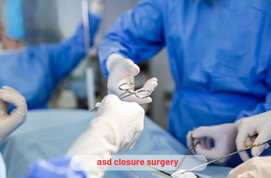
ASD closure surgery is used to repair a hole that appears in the upper chambers of heart. This surgery stop the abnormal blood flow, which helps to reduce the chances of heart failure, stroke, and arrhythmias. To perform this procedure, the surgeon uses either open heart surgery or minimally invasive surgery. We have the best cardiologists in India, who offer advanced and effective care at an affordable cost compared to other countries.
Types of Atrial Septal Defect (ASD)
The major types of ASD (Atrial Septal Defects) are given below:
- Ostium Secundum ASD: Secundum is one of the most common types of ASD that appears in the middle of the wall between the upper heart chambers.
- Ostium Primum ASD: Ostium Primum affects the lower part of the wall between upper heart chambers.
- Sinus Venosus ASD: Sinus Venosus is the rare type of ASD and it appears in the upper part of the wall between heart chambers.
- Coronary Sinus ASD: It is the part of ven system of heart. Coronary Sinus is also a rare type of ASD that occursin missing wall between coronary sinus and left upper heart chamber.
The treatment for ASD depends on these factors, because every type of ASD have different location and size. During the abnormal blood flow or other dangerous symptoms, the doctor suggests ASD closure surgery or device closure.
Who Needs ASD Closure Surgery?
ASD Device Closure is a procedure that used to treat an atrial septal defect (ASD) and help the heart function normally again. ASD closure surgery or device closure is typically needed for people, who experience:
- Atrial Septal Defects
- Heart Enlargement
- High pressure in the Lungs
- Heart Failure
- Shortness of Breath
- Stroke
Causes of Atrial Septal Defect
The causes of ASD (Atrial Septal Defect) are improper development of heart. Generally, ASD is formed during birth and develops during fetal heart formation. The main causes of this defect is not disclose yet, but genetic factors are play a crucial role in the cause of ASD. The factors are include:
- Infection during Pregnancy
- Smocking
- Alcohol
- Diabetes in the mother
- Lupus
Symptoms of Atrial Septal Defect
Small ASDs can not be detected until adulthood. However, the larger ASDs can be detected by some signs, such as:
- Shortness of Breath
- Fatigue
- Swelling in the legs or abdomen
- Heart Palpitations
- Poor Feeding
- Poor Weight Gain
- Blood Cloting
Benefits of ASD Closure Treatment
ASD closure surgery restores the normal blood flow in the heart and aids in preventing long-term or future ASD risks and complications. It will protect your lungs, also, and provide a quality of life. The advantages of ASD closure treatment are:
- Improved heart Function
- Reduced risk of Pulmonary Hypertension
- Better Exercise Capacity
- Prevention of Heart Rhythm Disorders
- Enhanced overall Quality of Life
Procedure of Atrial Septal Defect Closure Surgery
The treatment for ASD depends on the location, size, and other factors. So, look at the procedure of ASD closure treatment from before to after surgery:
Before the Procedure
The patients undergo some medical tests or assessments, like imaging tests and physical examinations, such as size and location. The tests are include:
- Echocardiogram
- Chest X-Ray
- Electrocardiogram (ECG or EKG)
- MRI
- CT-Scan
During the Procedure
During this surgery, cardiac surgeon or cardiologist give general anesthesia to the patients. Then, surgeon sealed the part either with a closure device or a surgical patch. Surgeon’s team closely observes or monitors every movement of the patient throughout the surgery. The duration of the surgery depends on the complexity of the defect.
Treatment Options for ASD Closure Surgery
Majorly ASD treatment procedure is performed in two methods.
- Open Surgery: Open heart surgery is most common method for heart repair. This surgery fixes the abnormal blood flow by closing the defect with a patch.
- Minimally Invasive Surgery: This surgery fixes the holes through small (4-6 cm) incisions between lung and heart. There is no need to use large sternotomy incisions.
After the Procedure
The patient will be hospitalized after surgery, the duration of hospitalization is 3-4 days, which depends on patient’s recovery. After reaching home, the patient has to do quite a few activities like watching TV, reading, and sleeping. Follow up on the doctor’s appointments and prescriptions for better and faster recovery. Usually, recovery time depends on the patient’s health or healing of chest incision, but generlly this surgery take 4-6 weeks to recover and go back to the normal activities.
Success Rate of ASD Closure Surgery
The success rate depends on the patient’s health and age. Our partner hospitals have an over 95% success rate in ASD closure surgery. They have advanced medical technology and highly skilled team that made the procedure safe and effective for both children and adults.