

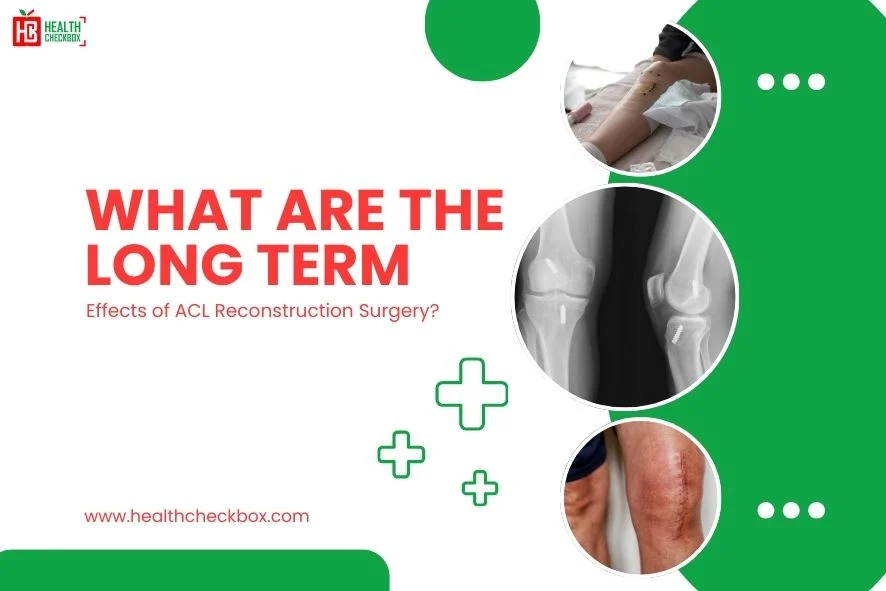
The Anterior Cruciate Ligament (ACL) is one of the significant ligaments that help in strengthening the joint of the knee. This can be injured during sports activities and put stress on the knee. It can be cured through the surgical process known as Anterior Cruciate Ligament Reconstruction. By undergoing this surgery, you can get relief from pain and return to your normal activities. Although ACL reconstruction surgery has long term effects that impact your daily routine. In this blog, we are going to explore the ACL, types of ACL, negative and positive effects related to ACL reconstruction surgery, and many more.
Explain ACL Reconstruction Surgery
It is a surgical procedure in which the damaged ligament is replaced with a tissue graft. The surgery is performed with small invasive arthroscopic techniques. It is a combination of fiber optics, small incisions, and small instruments. The surgeon makes a small cut on your knee, and with knee arthroscopy, a tiny camera is inserted into the knee. With the help of this camera the surgeon checks the ligament and tissue of the knee, then replace the original ACL with the graft.
Classification of ACL Reconstruction Surgery
The classification of the ACL reconstruction surgery is based on the grafts used by the surgeons during surgery. There are three types of ACL reconstruction surgery.
- Autograft: In this surgery, surgeon’s used patients’ own tissue for the replacement of a deteriorated ACL. This method is suggested as one of the best methods because it reduces the risk of rejection from the immune system. This is further divided into various parts such as Patellar Tendon Autograft, Hamstring Tendon Autograft, and Quadriceps Tendon Autograft.
- Allograft: It is a surgery in which the tissue used for the replacement of the damaged ACL which obtained from the donor. It is not compulsory in this surgery to take the tissue from the patient. It can be further categorised into several parts, like Patellar Tendon Allograft, Hamstring Tendon Allograft, and Achilles Tendon Allograft.
- Synthetic Graft: This method is still experimental and can be a great successor in ACL reconstruction. The grafts used in the surgery are generally made from non-biological materials. It is an effective and long-term useful method. These can be further divided into different parts, such as Polyester Graft and Carbon Fibre Graft.
Long-Term Effects of ACL Reconstruction Surgery
Every surgery has both positive and negative impacts on the patients. Here are some long term effects of ACL reconstruction surgery that affect the patient.
Negative Effects of ACL Reconstruction Surgery
There are some negative effects that impact the patient’s daily life. Some of them are listed below:
Chronic Knee Stiffness
Despite constant rehab post surgery, some individuals cannot fully straighten and bend their knee as they previously did. This often happens because the scar tissue is formed inside the knee joint or a small lumps called cyclops lesion that blocks full extension. Everyday activity and sport activity like climbing stairs and squatting add the additional stress on the joint that makes the knee feel harder and less natural than it previously did.
Lingering Pain
It happens because of the choice of the graft used in the surgery. The choice of graft plays a vital role in the type of pain you feel. The patellar tendon graft used in the ACL reconstruction surgery can cause sharp discomfort when kneeling or going down stairs. While hamstring tendon graft can weaken or sore the back thigh. Even the screws and other hardware are used to secure the graft, it may feel irritating to some patients.
Muscle Weakness
This is also a long term effect after ACL reconstruction surgery. Post surgery, the brain often struggles to fully activate the quadriceps, which makes it difficult to rebuild the strength of the muscles. If the hamstring tendon graft is used in the surgery, the muscles can be weaker. Those weaknesses of muscles can make the possibility of re-injury of the ACL and instability of the knee.
Loss of Proprioception
It is also known as the GPS of the knee that intercept the sense of movement of the knee. Before surgery, the original ACL contains nerve receptors that help the brain to sense the movement of the knee and react quickly. A reconstructed knee restores the knee stability, but does not fully restore the sensory function. As a result, the knee reacts slowly and feels irresponsive during sudden twists, rotations of the knee. This can affect the performance of the individual and also increase the risk of re-injury.
Development of Osteoarthritis
The ACL injury damages cartilages or meniscus, and the tissue of these cartilages or meniscus rarely rebuild or regenerate perfectly. This can raise the risk of the development of osteoarthritis. Many individuals feel the problem of arthritis within a decade or in some years after the surgery or just after surgery.
Mental Recovery
Even the knee feels strong and stable and the doctor advises the athletes to return to their sports related activity again. But there is a fear in their mind of being injured again during the activity. Confidence does not always return easily, there is some hesitation during movements even if the knee feels strong and natural. This anxiety leads to stiff, overly cautious movement that leads to chances of re-injury.
Positive Effects of ACL Reconstruction Surgery
Here are the positive effects of ACL reconstruction:
Restore Knee Stability
This is one of the biggest benefits of the ACL reconstruction surgery as it helps in restoring knee stability and functionality. The reconstructed ligament takes the role of stabilizing of the original ACL and holds the shinbone firmly in its place during the movement. With proper healing and constant rehab it allows the knee to function more naturally and reduces the risk of sudden falling or collapsing.
Return to Sports and Physical Activities
ACL reconstruction is very helpful to the athletes and those individuals who are active in daily lifestyle. ACL reconstruction gives the chance to return to their favourite sports, and it helps them in restoring their strength and the support they need for quick changes in direction, jumping, and squatting.
Enhance Muscle Strength through Rehabilitation
After the surgery of Anterior Cruciate Ligament Reconstruction rehabilitation plays a key role in the recovery of an individual to rebuild the strength. The quadriceps, hamstrings and surrounding muscles of the knee remain weaken after injury due to pain, swelling, and low activity. Exercise and therapy, like physiotherapy, helps the muscles to regain their strength. Strong muscles are very important for keeping the knee stable during sport activities.
Reduce the risk of Re-injury
Without the surgery of ACL Reconstruction the knee may remain unstable and put more stress on the muscles and the ligaments. By undergoing this surgery the chances of re-injury is very minimal and boosts the confidence of the individual to return to their normal activity. It is very helpful especially for the young athletes who engage in high impact sports.
Hospitals for ACL Reconstruction Surgery in India
ACL reconstruction surgery cost in India is affordable because Indian hospitals offer cost-effective treatment. Some of the best hospitals for ACL surgery in India are listed below:
Apollo Hospital, New Delhi
This hospital has experience of more than 39 years in transplants. Apollo Hospital has a dedicated centre for specialities like Cardiology, Orthopedics, and Oncology. They use advanced techniques like cut-edging technologies and robotic assisted surgery for the treatment. The hospital has 700+ bed capacity and is approved by the JCI and NABH for healthcare excellence. Apollo Hospitals has numerous branches in major cities of India. The cost of ACL surgery in Apollo Hospital, Chennai, is very low compared to other hospitals.
Artemis Hospital, Gurugram
This is the first hospital in Gurugram which is approved by JCI and NABH for global healthcare standards. It is a multi speciality hospital with 550+ beds and expert medical services like Cardiology, Orthopedics, and Neurology. The hospital uses advanced technology, like cutting-edge and the specialist doctor having an experience of more than 28 years.
Global Hospital, Chennai
It is a leading healthcare centre of Chennai and accredited by the NABH and NABL for their excellence in healthcare. It is one of India’s leading organ transplantation hospitals and the first hospital to perform 5 successful organ transplants in a day. The hospital has the capacity of 200 beds and uses modern technology like 16 slice PET CT scanner, the Truebeam STX, and a formidable 3.0 Tesla MRI machine. They have the doctors having an experience of more than 36 years.
Marengo Hospital, Ahmedabad
This hospital is one of the best hospitals in India for transplantation. It is a multi specialty hospital with multiple departments like Cardiology, Orthopedics, Oncology, etc. The hospital has the capacity of 350 beds, and the doctors have the experience of more than 38 years.
Felix Hospital, Noida
It is one of the best hospitals in India with the specialists having an experience of more than 20 years. They have modern technology, like cutting-edge technology, to diagnose and treat the patients. The hospital has the capacity of more than 500 beds, especially for the orthopedics. The success rate of this hospital is around 75% to 85%.
Conclusion
ACL injury is very common nowadays, and to get relief from pain, ACL reconstruction surgery is the best method for it. Although the long term effects of ACL Reconstruction surgery it can have both negative and positive effects as well. This blog helps the patients to understand and know about what are the long term effects of this surgery that can affect his day to day life.