

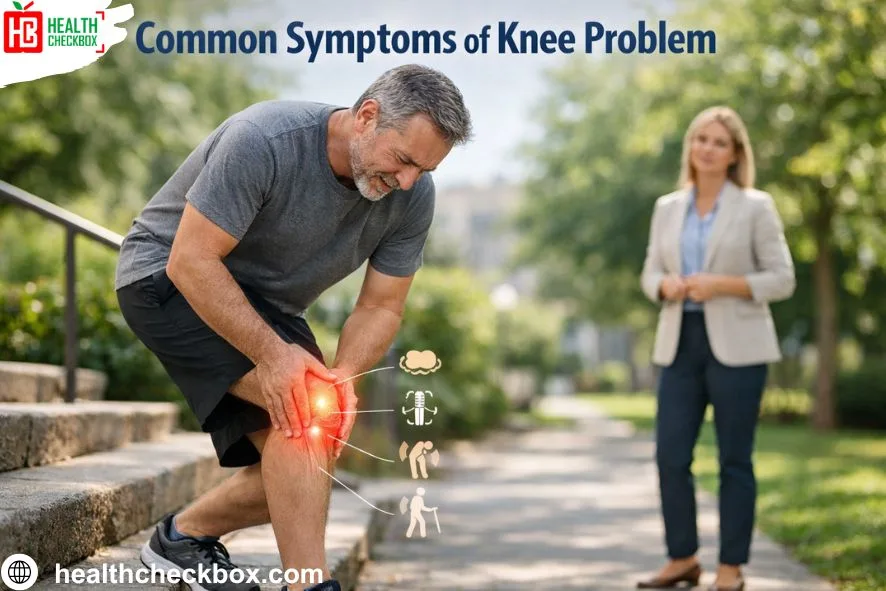
The knee joint is a place where your thigh bone and lower leg bone connect. The knee is one of the largest and most weight-bearing joints in the body. Constant stress on the knee joint can cause either short term knee pain or problems. Sometimes these short term knee pain transforms into long term knee problems. These knee problems are commonly caused due to heavy twisting and turning of the knee or putting excessive pressure on the knee. Some of the long term knee problem symptoms are reduced range of motion, pain with activity, etc. In this blog, we will cover all the information related to common symptoms of knee problems and their effect in detail.
Top 5 Common Knee Problems
Knee problems are very common nowadays. It can happen to any age group for several reasons. Below mentioned are the top 5 most common knee problems that you can see in day to day life.
Sports Injuries
One of the most common ways to injure your knee is while playing any sports, especially high intensity sports. Sports like football, cricket, basketball, etc. Some of the knee injuries that you may get from these sports are:
- ACL Injury: This injury occurs when you get a tear or a sprain in your ligament. The tear or sprain happens because of sudden change of direction or falling in an unnatural position.
- Meniscus Tear: There is a cushion like structure between your shin bone and thigh bone. This cushion-like structure is the cartilage. Meniscus tear happens when there is a tear through the cartilage. This occurs when you suddenly twist your knee while lifting something heavy.
- Patellar Tendinitis: This is also known as the jumper’s knee because it is commonly found in people who play sports that require jumping. This occurs when there is an inflammatory condition in your tendons. This tendon connects the kneecap to the shin bone.
Osteoarthritis
Osteoarthritis is the most common joint disease. In this, the cartilage starts to decay over time. This makes the movement slower and causes stiffness, swelling and chronic knee pain. The pain gets worse with time and activity. Due to this reason, it is also known as “Wear and Tear”. WHO states that osteoarthritis is more common in women, especially after menopause.
Mechanical Knee Issues
This issue occurs when you face any structural damage or any abnormality within the joint. This can happen due to many reasons like:
- Dislocated Kneecap: Kneecap protects your knee from taking fall damage. But sometimes during the fall the kneecap moves out of place. This affects the movement of the knee.
- Loose Body: In this, a piece of bone or cartilage breaks off and floats around the joint area. This small fragment of bone is also known as the joint mouse. This can get stuck between your joint recesses or synovial pockets, which causes discomfort.
Inflammatory Condition
Inflammatory conditions are one of the most common reasons due to which you can have knee problems. Some of the conditions are mentioned below:
- Rheumatoid Arthritis (RA): It is an autoimmune disease which causes pain, swelling, and stiffness in the lining of your knee joints for a long time. In Autoimmune disease your immune system starts to attack your body rather than defending it.
- Gout: This happens due to uric acid that builds up in your knee joint. Extreme pain, swelling, and redness are considered as common causes of knee pain. This also reduces the mobility of the knee.
- Bursitis: In this, the bursa also known as fluid filled sac which cushions the joints gets inflamed. This inflammation causes the pain and swelling in your bursa. Mainly caused due to repetition in movement, injury or putting constant pressure on your knee.
Cartilage Damage
Cartilage is a tissue which is present in between the bones. This makes the mobility of the bones smooth. If this gets damaged, it can cause feelings of discomfort, stiffness in movement and intense pain. This occurs due to continuous movement of the cartilage or repetitive injury.
Common Symptoms of a Knee Problem
Having the knowledge of knee problem symptoms is very important. It can help you in identifying the seriousness of the condition that you have. Some of the symptoms are mentioned below:
Persistent Pain
- Symptom: You can feel a little discomfort or pain after a long session of workout, trekking or any high intensity activity. It is pretty common if you feel it regularly or it gets worse by doing regular activities.
- What this Indicate: Persistent knee pain is the first thing which indicates that you have a knee problem. It is the most common symptom as every problem has knee pain.
Swelling and Redness
- Symptom: Swelling and redness in the knee joint are one of the most common symptoms of a knee problem. Redness occursimmediately after the injury. And after a short while the injured area may swell up.
- What this Indicates: Swelling can be of two types: sudden and slow. Both indicates knee problem but of different types:
- Slow Swelling: This shows that you might have arthritis or of an injury because of the overuse of the knee.
- Sudden Swelling: This shows that you might have a ligament tear.
Note: Redness may indicate inflammation and, in some cases, infection.
Stiffness or Reduced Mobility
- Symptom: Having problems with bending and straightening of your knee is a sign of stiffness. You can feel this stiffness more when you try to straighten up your leg after sitting for too long or in the morning. Not being able to bend the knee properly also reduces mobility and you will limp while moving.
- What this Indicate: Experiencing stiffness and reduced mobility in the knee mainly indicates the sign of joint inflammation or early sign of arthritis. This also shows signs of damage or tear to cartilage, ligaments or tissues surrounding the knee joint.
Clicking and Popping Sound
- Symptom: Normally, popping sounds from the knee are pretty normal as it can be caused by gas bubbles between the joints. If you hear the sound and feel no pain then there is nothing to worry about. But, if you feel some pain in your knee after the sound it could be harmful.
- What this Indicate: Hearing constant popping and clicking sound especially with pain shows that you might have damaged cartilage or joint structures.
Weakness of Instability
- Symptom: If you are experiencing weakness in the knee or your knee is giving out, these are the signs of having knee problems. You can experience these things while standing up, walking or while lifting a low amount of weight.
- What they Indicate: These symptoms usually point towards issues like ACL (Anterior Cruciate Ligament) injury or meniscus tear.
How to Prevent Knee Problems?
Knee problems are getting very common in every age group nowadays. Due to its common nature it is easy to prevent these problems rather than facing them. Some of the prevention tips are mentioned below:
- Warming Up and Stretching: Doing warm-up and stretching before workout or engaging in any high intensity activity. This will help in opening up your muscles and will not take any sudden stress which can cause injury.
- Strengthen the Support Muscle: Knee problems can be prevented by increasing the strength of the supporting muscles. Increasing strength can make the knee more durable and less prone to injury.
- Use Protective Gear: While playing any sort of contact sports wear the protective gear. This will reduce the chances of getting any direct contact injuries.
- Don’t Ignore Pain: Ignoring minor pain or discomfort can be fatal as it can later become a major knee problem. Taking rest in between and giving the knee time to heal can increase the chances of prevention.
- Diet Management: A proper diet contains food for knee joint health, which helps in prevention of knee problems. Foods rich in omega 3 Fatty acid and vitamin C also green and leafy vegetables help in reducing the pain.
Diagnosis and Treatment Options for Knee Problems
People suffering from knee problems must go through the process of diagnosis. This helps the doctor to understand the patient’s condition properly and suggest optimal treatment.
Diagnosis
The first thing a doctor will do is the diagnosis of your knee. Diagnosis reveals the knee problem symptoms which helps the doctor in addressing the problem properly. The diagnosis procedures are mentioned below:
- Medical History: The first thing a doctor will do to diagnose is ask for your medical history. The medical history will help the doctor understand your past conditions or any past medical condition that you have. After this, the doctor will suggest you to take some test which will highlight the issue properly.
- Physical Examination: Here, the doctor will assess your condition by bending, rotating or lightly pressing on the knee to identify the damaged spot. This examination also tells the strength, stability and range of motion of the knee.
- Imaging Test: In this, the doctor will do some tests like X-Rays, MRI, or ultrasound. These tests help in revealing the fractures, dislocations, and images of soft tissue. Through this the doctor can identify tears or damage.
- Laboratory Test: Sometimes the doctor may suggest you get a blood test like inflammatory markers (CRP, ESR), rheumatoid factor, and uric acid. This will identify any type of infection or inflammation that could be the reason for your knee pain.
Treatment
The treatment of the knee problem will depend on the seriousness of the condition.
- Conservative Treatments: This method is used for minor issues which can be treated without any surgery. Some of the examples are RICE method, Physical therapy, Medication and Weight management.
- Surgical Treatments: This is used when the condition of the injury is more serious or you have structural damage to the knee. Some of the injuries can get treated properly and heal but in some extreme cases doctors may perform a knee replacement surgery.
Conservative methods can be performed without the doctor’s involvement. Whereas in surgical treatment you have a presence of an expert surgeon who will perform and guide throughout the surgery. For surgical treatments, India is one of the best countries for knee replacement surgery. Some of the best knee replacement hospitals in India are Apollo Hospital, Fortis Hospital, and many more.
Conclusion
Having knowledge of knee problem symptoms can help in preventing long term damage or pain to the knee. If you are facing any of the symptoms like persistent pain, swelling, weakness, etc, you may consult your doctor. These symptoms can be cured with proper care and treatment, and maintaining a healthy lifestyle ahead.