

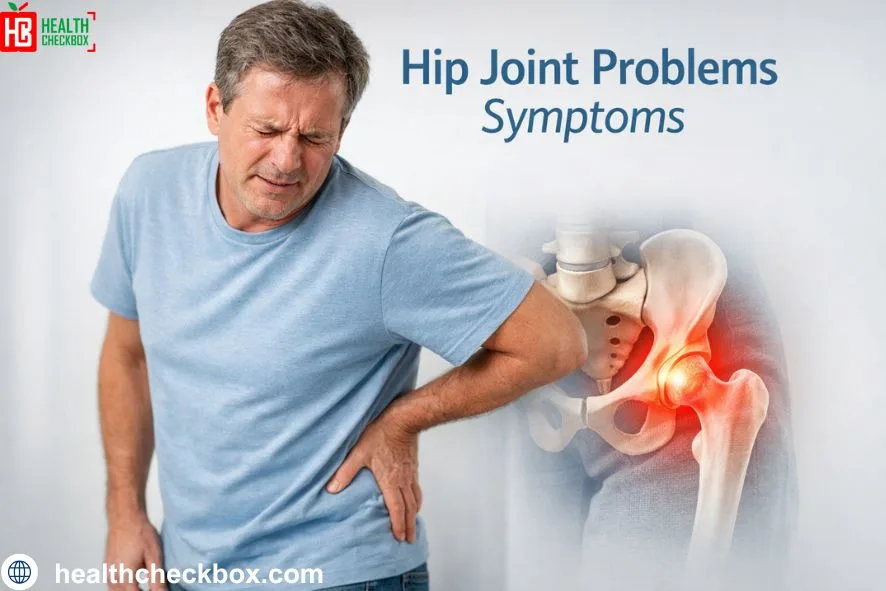
Hip pain is discomfort felt in or around the hip joint and may originate from bones, cartilage, muscles, tendons, ligaments, or nearby structures such as the lower back or pelvis. The causes of hip pain are strains and inflammation of the hip area. Early detection of hip pain allows one to avoid significant issues in the future and provides effective therapies. Most of the people ignore these minor symptoms considering them as temporary issues or old age issues. However, these symptoms tell about the underlying cause of the problem in the body. In this blog, we will cover all the information regarding the early symptoms of hip joint problems in a more detailed manner.
Symptoms of Hip Joint Problems
There are various early symptoms of hip joint problems that include stiffness, limited range of motion, and a grinding sensation. It can radiate the pain to the thighs and to other lower limbs. The early signs are:
- Groin Pain: The pain is a dull pain which occurs at the junction of the thighs and lower abdomen. The pain is the sign that you have a joint problem inside and it could be arthritis or labral tear.
- Reduce Mobility: There will be a limit to the range of motion and it may complicate walking or it may result in limp.
- Grinding or Clicking: In the event that you experience any grinding or clicking in the joint, it may implies cartilage damage or loose tissue. One can hear it usually in a pop tone when walking and running
- Pain while Walking: You are able to experience constant pain when walking over a longer distance.
- Stiffness: It is the inability to move hips, it occurs in the morning when you wake up or after sitting down too long. Then your hip will start to trouble you in doing your day-to-day work.
- Reduced Mental Well-being: The effect of reduced physical mobility can really affect the mental well-being of an individual. You tend to lose interest in activities that you normally enjoy doing due to hip pain.
- Relief is not Available in Other Forms: Many hip conditions can be managed with non-surgical treatments such as physiotherapy, medications, and lifestyle changes. Surgery is recommended only in severe cases.
Causes of Hip Joint Problems
There are various causes of hip pain:
- Osteoarthritis: It is one of the most common causes of hip pain and mostly occurs in older people. It can happen with an injury or normal wear and tear can damage the cartilage that cushions your hip bones, and a lack of cushioning can lead to pain and stiffness in the area. Also, it can reduce the range of motion.
- Bursitis: These are the sacs of fluid that are located between the tissues. Bursae help to ease the friction of the tissue rubbing together. When bursae get inflamed, it can lead to pain in the joints. This happens due to repetitive activities that overwork the hip joints.
- Hip Fracture: Since bones become weak with age, they may break in case of a fall. A stress or an injury may lead to a hip fracture.
- Labral Tear: It is a type of tear that happens in the ring of the cartilage that surrounds the socket and causes clicking or a sharp pain in the groin during motion. Athletes or people who perform twisting activities repeatedly have a higher risk of developing this problem.
- Hip Impingement: Hip impingement occurs when extra bone growth makes abnormal contact with the femur and acetabulum. It causes pain and leads to restricted movement and osteoarthritis prematurely. It happens in younger people who do high-intensity activities.
Risk Factors of Hip Joint Problems
There are a variety of risk factor for hip joint problems, and these risk factors can increase the likelihood of getting osteoarthritis, bone fractures, and bursitis. Mentioned below are the risk factors:
- Age: Age causes the cartilage of the hip joint to be wear out, and also causes osteoarthritis.
- Obesity: It is a condition where your body weight is too heavy and this may stress your hip joints and accelerate the wear and tear process.
- Injuries and Trauma: Injuries like fractures and dislocations may result in post-traumatic arthritis or chronic pain.
- Lifestyle Activities: The activities that may harm the hip joints are jobs or sports activities that involve constant and intense movements.
- Poor Posture: This brings uneasiness and pain in your joints. If you don’t maintain your body posture, then it will put pressure on your joints. Also, poor posture and prolonged sitting can increase strain on hip and lower back muscles, leading to discomfort.
Diagnosis and Evaluation
The process of examining the pain of the hips starts with the complete history and physical examination of the patient, which covers the information about the patient, range of motion and strength. It involves imaging techniques like X-ray, MRI, or ultrasound to determine the origin of the pain. There are various diagnostic approaches, which are mention below:
- Medical History: Assess the type of pain, its location, and effect on activities.
- Range of Motion: Examination of such limitations as flexion, rotation, and abduction.
- FADIR Test: It is used to check for impingements or labral tears.
- X-ray: It is a type of imaging to detect any form of fracture or any loss of joint space.
- MRI: It is most useful in diagnosing soft tissue problems like labral tears or cartilage ruptures.
Common Hip Diagnoses:
- Labral Tear: It presents with groin pain and limited mobility
- Referred Pain: Back pain can be referred to as lower back problems.
- Osteoarthritis: It is identified by the presence of pain and stiffness, particularly when the person sits longer than normal and in most cases, it usually improves after 30 minutes.
When Should You See the Doctor?
Hip joint problems can be a real pain, and it can limit your mobility, disrupt your sleep, and prevent you from doing your favourite exercise. Ignoring this problem, thinking of it as a minor discomfort that will go away with time, can lead to a serious problem in the future. If hip pain persists for more than a few weeks, consult an orthopedic doctor to explore non-surgical alternatives to hip replacement like physiotherapy, medications, or injections before considering surgery. Various signs that indicate that you should go and see the doctor:
Persistent Pain
If your hip aches or you have a constant pain in your hip joint that lasts for more than a few weeks. Then it is time to consult the doctors for this cause. Continuous pain indicates a number of issue which includes arthritis, muscle strain or any other major problem
Reduced Mobility
You will feel uncomfortable with movement of your hip, walking up and down the stairs and putting on your shoes. This immobility will affect your day to day activities greatly and might be an indication of some underlying issue.
Weakness or Limping
When the pain in your hips is accompanied by your leg weakness or limping, then you are advised to visit the doctor immediately. These symptoms may indicate the presence of something more serious, such as a fracture or nerve damage.
Nighttime Discomfort
Pain, which is bothering you at night and is not good, and you should consult with your doctor as soon as possible. Even a healthy hip will not deny you the chance of getting a good night sleep.
Clicking or Popping
If your hip makes a clicking or popping sound with movement. If the popping sound is very frequent while doing any activity, then there might be an underlying cause that needs to be treated immediately.
Treatment for Hip Joint Problems
There are various types of treatments, which can be non-surgical or surgical procedures, that help to repair and restore mobility. Both procedures are mentioned below:
Non-Surgical Procedure
- Physical Therapy: Try to perform exercises to make the hip muscles stronger, and increase the range of motion and flexibility.
- Medications: NSAIDs, such as ibuprofen, are implemented to assist in decreasing the pain and inflammation in the area of the hips.
- Lifestyle Modifications: Rest well, take walks with walking aids or braces to support and lessen the load of the joint and apply ice or a heat pack to the speedy recovery.
Surgical Procedure
- Hip Replacement: Hip replacement surgery is a procedure where we replace the damaged hip joint with artificial implants, often using minimally invasive surgery.
- Hip Resurfacing: It is a process where we remove the damaged cartilage and resurface the joint with metal.
- Hip Arthroscopy: A small process where we use a camera and small tools to repair the labral tear or remove loose cartilage fragments.
Prevention Tips for Hip Joint Problems
There are some ways mentioned below, which can help you in preventing hip pain in the joint:
- Weight Control: Try to maintain your weight since excess weight can put stress on your joints.
- Light Impact Exercise: Try to perform such exercises that do not put pressure on the hips, such as cycling, walking, etc.
- Flexibility and Stretching: Hip flexors and hamstrings are the exercise that should be done regularly in order to keep the tendons and ligaments healthy.
- Good Shoes: Have well-cushioned footwear and support to ease the pressure on the hip joints.
- Strength Training: Work and make your muscles strong enough to hold your hip, glutes and hamstrings involved to maintain balance.
- Warm Up: It is important that before you start exercising, it is better to have some warm-up exercises to ensure that the blood and the joints are lubricated.
Conclusion
In conclusion, we have mentioned the early symptoms of hip joint problems, their causes, and their respective risk factors. Early diagnosis and evaluation techniques will help us to improve the condition of our hip joint through various treatments. There are some prevention techniques that you can follow like weight control and warm-up exercises, which can help you prevent hip joint pain. Consult a doctor if hip joint problems symptoms last more than 2–3 weeks or become severe.