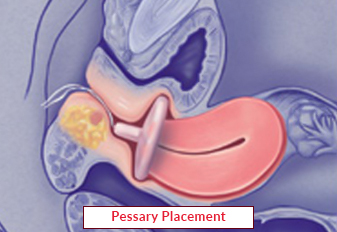
Doctors performs pessary placement treatment to manage pelvic floor disorders, such as pelvic organ prolapse and urinary incontinence. Pelvic organ prolapse is a condition affecting women in which one or more pelvic organs, including the uterus, bladder, or rectum. It occurs due to slipping of one or more pelvic organs from the pelvis. This weakens the muscles and connective tissue of a pelvis. The pelvic floor is a group of muscles and connective tissues located at the base of the pelvis. These muscles are mainly found at the base of a pelvis and their main function is to support pelvic organs that can be bowel, bladder, ureters, etc. They are most important for sexual reproduction, pregnancy, and childbirth for women.
When these muscles get weakened in the pelvic cavity, it leads to pelvic organ prolapse. This condition is not treated or diagnosed easily. Women experience many health issues during sex and pregnancy. It leads to sexual issues, changes in urinary and bowel movements, lower back pain, pelvic pressure, etc, in patients. When left untreated, pelvic organ prolapse typically worsens over time and can significantly impact quality of life, sexual function, and urinary and bowel control.
Its best treatment approach is pessary placement. It is a device that supports the pelvic organs when it is attached to a vagina. This procedure is not only helpful for pelvic organ prolapse but also beneficial for stress continence in patients. Its other name is pessary fitting.
Types of Pessaries
This medical device consists of different types. These are as follows:
Ring Pessary
The ring pessary is one of the most commonly used pessary types, suitable for mild to moderate pelvic organ prolapse. For stress urinary incontinence, a ring pessary with an incontinence knob is the appropriate variant, a standard ring pessary without this feature is not recommended for incontinence management alone. It is an O-shaped pessary and can be applicable for different versions. A healthcare provider can choose the best option for a patient’s condition treatment.
Donut Pessary
It is recommended for cystocele, rectocele, and uterine prolapse in individuals. This device is donut-shaped and can be made from soft and medical-grade silicone. When it becomes odorous or discolored, a healthcare provider are routinely replaces the pessary every 3–6 months during scheduled follow-up appointments. If the pessary becomes odorous or discolored before the next appointment, contact your gynecologist for earlier replacement.
Gellhorn Pessary
When a patient is suffering from advanced pelvic organ prolapse, then this option is best for him or her. This device is disk-shaped and it is also known as space-filling pessary. It fills the shape to provide support in the upper vagina as a ring pessary.
Shaatz Pessary
The uterine prolapse and cystocele are being managed in moderate to severe conditions. It is a disk-shaped device, but does not have a knob. This equipment is mostly recommended for women who find difficulty with ring pessary.
Cube Pessary
When urinary stress incontinence is mild in patients, this device is suitable for them. The cube pessary manages mild stress urinary incontinence and third-degree uterine prolapse. Unlike some other pessary types, the cube pessary should typically be removed before sexual intercourse and reinserted afterward. Patients are taught self-removal and reinsertion as part of their care routine.
Gehrung Pessary
It is a U-shaped device, which is recommended for the treatment of cystocele, rectocele, stress urinary incontinence and second or third degree uterine prolapse in patients. This pessary is made from a medical-grade silicone and must be removed before X-ray, MRI and ultrasound tests.
How can it be Fitted?
A vaginal exam will be performed and some measurements will be taken so that a pessary can be correctly fit into your pelvic organs. Depending on the exam and severity of the prolapse, then a pessary with the right type and size can be opted for patients.
After that, a pessary is placed into the pelvis, and the doctor makes the process more comfortable through lubricant or lidocaine. The working of a pessary can be checked when a doctor tells a patient to cough, sit, and squat. They may also identify its place if an individual is asked to urinate.
Advantages of Pessary Placement Treatment
The benefits of this procedure are the following:
- It is generally inexpensive and can be used safely by a doctor.
- This method is minimally invasive, which provides pain-relief in patients.
- It does not require surgery and can be a long-term treatment for pelvic organ prolapse and stress incontinence.
Why is Pessary Treatment Recommended to Patients?
A healthcare professional recommends a pessary for the treatment of certain health issues. These are as follows:
- Bowel problems
- Urinary Incontinence
- Women who wish to avoid or delay surgical repair of prolapse
- Pelvic organ prolapse
This device is not suitable for patients with severe prolapse. They must consult with their relevant doctor for its treatment.
Risks and Complications in this Treatment
Pessary placement is a safe procedure, but it leads to different complications. These are as follows:
- Pain and discomfort due to wrong fitness
- Vesicovaginal or rectovaginal fistula
- Trouble during sexual intercourse
- Infection in urinary tract
- Pessary incarceration
- Bleeding and discharge
How to Care for Pessary?
If a ring pessary is inserted in the pelvis, then it is easy to take care of it. A patient can remove this device gently, and the hands must be washed with mild soap and water. Before reinserting, a pessary should be rinsed and dried completely.
The regular follow-up visits are required for monitoring the pessary effectiveness in patients. A vagina will be examined by a provider which identifies that this medical device is in still working condition. An individual must consult with a healthcare provider for cleaning and checkups if he or she gets troubled in removing the pessary on their own.