

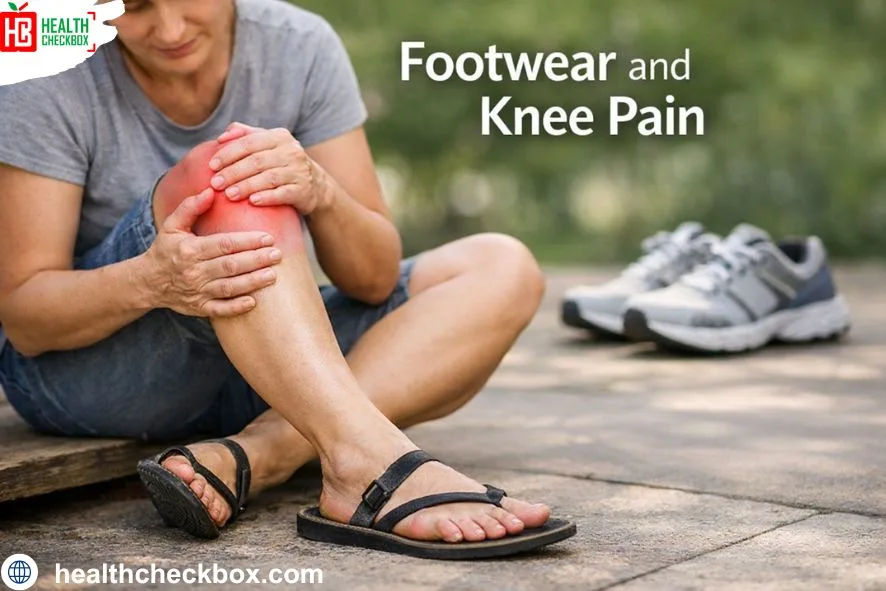
Knee pain is a very common problem that is faced by adults. It can happen due to injury, age factor, overuse, or maybe joint conditions. But footwear plays a major role in how pressure is distributed across the knee joints. The connection between footwear and knee pain is due to the type of shoes we wear. Choosing the right shoe with proper cushioning will help to decrease the pressure on the joints while walking or doing any abnormal activity. If we don’t choose the right shoes, then the pressure from walking will be directed towards the knee. In this blog, we will cover all the information about the role of footwear and walking patterns in knee pain.
Understanding Knee Pain
Knee pain is one of the common symptoms of a knee problem that can affect anyone at any age. Knee pain is a discomfort that you feel around your joints. Symptoms of knee pain are swelling, redness around the knees, and instability in the knee. Common causes of knee pain are ligament tears, meniscus tears, and many more. Knee pain can occur for a short period of time and can stay for even longer periods. Treatment for the knee pain can be RICE, which stands for rest, ice, compression, and elevation, which help to reduce inflammation and redness from the area. If the pain doesn’t go away, then you should consult your doctor and start your physiotherapy.
Connection Between Footwear and Knee Health
Footwear impacts the knee health by changing joint loading, shock absorption, and gait, affecting the conditions like osteoarthritis and patellofemoral pain. There are various connections between footwear and knee health:
- Shock Absorptions: Shoes are the first line of defense against the impact. Lack of cushioning on the shoes forces the knee joint to absorb the shocks and it causes wear and tear due to this.
- Arch Support: Shoes which lack arch support can lead to overpronation (inwards rolling of the feet) and cause strain to tendons and ligament around the knees. This often leads to pain.
- Heel Height and Joint Load: Wearing high heels may increase the load on the knee as compared to flats.
How does Footwear Affect Body Alignment?
Footwear acts as the foundation of body alignment, which directly impacts posture, joint pressure, and muscular effort from the ground up. Improper shoes like heels, or an unsupported sole, can alter its gaits and lead to chronic misalignment in the feet, knees, and lower part of the body. Footwear and its body alignment:
- High Heels: They force the lower back to arch, which increases the pressure on the lumbar spine and shortens calf muscles and can lead to Achilles tendinitis.
- Flats: Lack of arch support that causes foot to collapse inwards, causing a chain reaction of misalignment in ankles, knees, and hip.
- Tight Shoes: They restrict the natural movement, leading to stiffened ankles and forces postural change to maintain balance.
- Worn-out shoes: Uneven cushions affects the weight distribution, which can lead to gait issues and muscle fatigue.
Consequences are:
- Hip Pain: It causes hip pain due to improper posture and puts pressure on the back and hips.
- Knee Injuries: It causes knee pain due to misalignment of the foot and can cause unnatural knee rotation and a higher risk of ankle injuries.
Features of Supportive Footwork
Selecting the best footwork can help reduce joint stress and support healthy habits. Before buying any shoes look for these features in the shoe:
- Cushioning: The shoe with a good cushion helps to absorb the pressure while walking, or doing any other abnormal task. Like sport shoes, they have good cushions which may reduce pain and improve functional mobility if worn every day.
- Flexibility: Flexible soles allow the foot to move more naturally while walking and still providing torsional stability.
- Arch Support: Built-in arch support distributes the weight evenly and prevents the foot from rolling forward reducing the pressure on the knees.
- Firm Heel Counter: A sturdy heel counter keeps the heels in place which helps to maintain the stability and reduce ankle instability.
- Curved Soles: This type of soles encourage a smooth, rolling motion from heel to toe which may reduce pressure load and decrease stress on the knees.
Types of Footwear that May Contribute to Knee Pain
There are various types of footwear which cause knee pain due to misalignment, instability and poor shock absorption that lead to pressure on knee joints. There are footwear like high heels, flat tops and various others that don’t have proper support. Thus, this leads to excessive load in the patellofemoral joint and worse can happen. Types of footwear are:
- High Heels: This shifts the center of gravity in forward directions, forcing the knees to remain bent and causing significant stress in the patellofemoral joint.
- Flat Shoes: This lacks arch support and causes your foot to roll inward which leads to misalignment and increases strain.
- Old Sneaker: Shoes which have lost their cushioning and support will fail to absorb the shocks, causing higher pressure directly transferred to the knees.
- Heavy shoes: Heavy Shoes do not allow natural movement, can cause problems with gait and create unnatural force on the knee.
- High Heel to Toe Drop Shoe: It is comfortable but this type of shoe can increase the force on the front of the knee.
Waking Pattern (Gait) & Knee Pain
Walking pattern or gait is a coordinated movement of the legs and feet during walking. A normal gait cycle has various phases which includes heel strike, weight transfer and many more. While taking each step, the knee flexes and extends to absorb the impact and propel the body towards the forwards direction. Ensure proper coordination between the muscles, joints and bones for proper movements and minimize the joint stress.
Common Walking Pattern that Causes Knee Stress
- Long steps: Taking steps that are too long means that the heel strikes the ground far ahead of the body. This leads to creating a braking force that sends the pressure to the knee joints and creates high impacts loading.
- Locked Knee Landing: Avoid landing with the knee straight as rigid knee prevents the knee from acting as a shock absorber and puts large amounts of pressure on cartilage and bones.
- Overpronation: This happens when your feet roll excessively inwards after you make contact with the ground. This movement can change my alignment and put more pressure on the inner parts of the knee.
- Underpronation: When your foot rolls outwards too much and causes stress on the outer knee joint, which can increase the risk of pain or injury.
- Heel Striking: If you land your heel heavily while walking, then this walking posture increases the pressure on your knees. It can impact and lead to joint irritation and pain.
How Abnormal Gait Can Affect Knee Joints?
Abnormal gait is often caused by injury or pain, which changes the knee biomechanics by increasing the abnormal pressures and accelerating the cartilage degradation and instability. Effects are:
- Increase Joint load: Abnormal walking patterns can increase the load on the inner part of the knee, which can lead to break in cartilage.
- Reduce Knee Extension: If you continue walking with a limited range of motion, it can increase the strain on your quadriceps and pressure on the patellofemoral joint.
- Muscle Weakness and Imbalance: Improper gait patterns like shorter step length, less gait speed indicates that there is less muscular support. This can lead to poor knee stability.
Importance of Proper Footwear for Healthy Walking
The proper footwear should have good cushioning, support and stability in the shoes in order to prevent injuries. Quality shoes help to align your feet, improve posture and reduce the pressure on the lower back and knee while walking. Key features are:
- Joint Protection: Proper cushioning will act as a shock absorber which will help to protect knees and ankles from the impact of walking.
- Enhanced Stability: A stiff heel counter and sole provide stability, which decreases the risk of falls and helps in improving balance.
- Long-term Mobility: Always wear supportive shoes which helps to prevent discomfort and supports lifelong mobility.
- Improve Gait and Alignment: Quality and proper footwear can correct the gait issues and help in aligning the ankles, knees and reducing the overall discomfort.
Conclusion
In the end, we have covered all the information about the relation of footwear to knee pain. We have explained why choosing the right footwear helps to prevent injury and load to the knees. We have also mentioned some of the best footwear to use and what footwear to avoid these problems in the future.