

Over the past decades, modern medicine has changed. IVF is a gift from modern medicine to couples who are having trouble becoming pregnant naturally. In contrast to western nations, India is renowned for its highly qualified medical personnel, cutting-edge technology, and reasonably priced care. As a result, an increasing number of couples travel to India for IVF therapy. IVF therapy is a difficult procedure. Couples should be aware that there are numerous factors affecting IVF success rate in India and throughout the world. By learning everything about IVF, they may prepare themselves psychologically, emotionally, and physically to ensure higher success. In order to make sure you are ready for a significant step in your life, we will examine some of the factors affecting the IVF success rate in India in this article.
Understanding IVF treatment
IVF is a process in which eggs are retrieved from the ovaries and fertilized with sperm in a laboratory. The eggs are placed in the patient’s womb once the embryo has developed. To finish a cycle, IVF requires a number of steps. Initially, the patient receives an injection of hormonal medicines to stimulate the ovaries, causing them to generate more eggs.
The ovaries are where these eggs are extracted. Following that, male sperm are used in a lab to artificially fertilize the egg. Before an embryo transfer is carried out, where one or more developed eggs are put into the womb, the fertilized egg is developed in the lab for a few days under tightly regulated conditions to ensure the egg is developed correctly. Finally, the pregnancy test is performed in two weeks.
IVF Success Rate in India
Despite all such advanced technology, no clear percentage on how many IVF cycles should be needed to get pregnant. Most patients require multiple IVF procedures in order to achieve results. According to research, the more IVF cycles one goes through, increse the chances of succeeding. Success of IVF treatment in India is determined by many factors. The most important one being age; younger the age, the higher the chances of success. With more medical advancements, the success rate of IVF has gone up to approximately 80%, which depends on the age and health condition of the woman. The needs of a child can certainly be achieved with perseverance and a good way of life.
Factors Affecting IVF Success Rate in India
Despite the fact that IVF success rates have increased over time, a number of variables, including age, fertility, medical history, and others, may affect the outcome. Because of its importance on the outcome, the specialist looks into every aspect before the IVF procedure begins. Let’s examine some of the factors affecting India’s IVF success rate.
Age
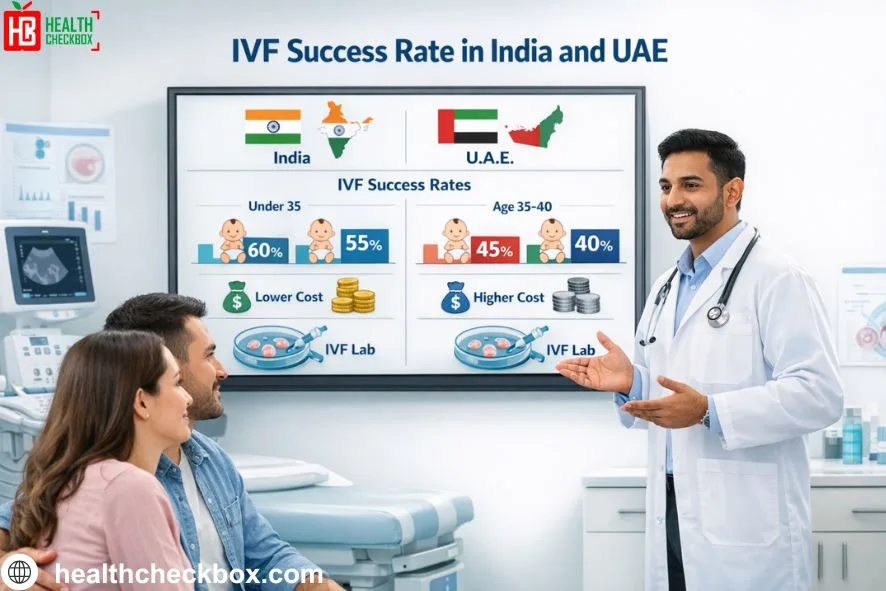
According to the studies, there is an inverse relationship between age and IVF success rate, as age increases, the success rate decreases. Women are more likely to experience problems including poor egg counts and genetic abnormalities. According to fertility clinic data, the chance of success for a single cycle is at 55.6% for women under 35. The chance of success in a single cycle is less than 40.8% for women aged 35 to 37. And the rate drops to about 20% to 30% for women in their late 30s. While women over 40 have less than 12 percent. But this percentage isn’t set in stone. It’s crucial to be patient because success may rise with repeated cycles.
Quality of Eggs and Sperm
When a woman is born, she has millions of eggs but as she grows old, the number and quality of her eggs start to decrease. They may become deformed or fail to fertilize. To select the embryos that have the highest probability of success, embryos graded specialists assess embryos at Day 3 or at the blastocyst stage (Day 5).
The Blastocyst Stage of Expansion, Inner Cell Mass (ICM), and Trophectoderm Epithelium (TE) Quality are used to rate the quality. Individual pregnancy outcomes can differ, despite the fact that embryo grading provides a way to assess the quality of embryos. As a result, one should be positive, optimistic, and considerate of personal circumstances.
Controlled Ovarian Stimulation Protocol
The capacity of eggs to successfully fertilize and produce a healthy child is greatly influenced by genetic variables. Controlled ovarian stimulation is a technique that describes the type of fertility medicine used or the time to be given. Although some factors, such as intraovarian hormonal changes during the pre-ovulatory period, may alter the development. Numerous ovarian stimulation methods exist, such as GnRH Agonist Conversion Protocols, Microgore GnRH Agonist, and extended GnRH Agonist. The patient’s appropriate Ovarian Stimulation Protocol must be determined by a medical professional.
Medical history
Any previous medical history or treatment, including PCOS, endometriosis, thyroid, and diabetes, may influence the IVF treatment outcomes. The doctors thoroughly investigate each issue since they may not be able to avoid the treatment, yet they may influence the development of the egg or the reaction of the lining.In some cases, there can be issues with embryo transfer. Nevertheless, most diseases can be controlled with the help of regular checkups and a healthy lifestyle.
Tips To Increase IVF Success Rate
It’s critical to prepare the body and the mind before and even after embryo transfer. A healthy lifestyle can greatly increase the likelihood that IVF will be successful. Experts frequently stress how crucial it is for both partners to maintain healthy lifestyles. Some of the chances may be involved.
Healthy Diet Plans
It’s also important to eat healthy food after the embryo transfer. You have to maintain a diet with a high level of vitamins, minerals and nutrients. These consist of berries, potatoes, soybean, green leafy vegetables, and so forth. These foods promotes ovulation, nourishes the womb, and slows egg degradation in women. On the other hand, foods that stimulate highly motile and vigorous sperm should likewise stimulate the quantity of sperm in men; this includes eggs, chocolate, soybeans, green beans, tomatoes, bananas, berries, etc. Both should abstain from processed or packaged foods, smoking, alcohol, caffeine and foods heavy with fat or sugar.
Regular Exercise
Maintaining a healthy physique and weight can be achieved by doing frequent excess activities like yoga, walking, or other small extras. In addition to improving physical health and getting the body ready for the child, it also aids in stress reduction.
Good Sleeping Habits
A balanced sleeping pattern aids in the body’s organ and metabolic restoration. Therefore, it is recommended to acquire at least 7-8 hours of sleep, and the likelihood of success is increased by avoiding food and caffeine right before bed.
Top Doctors For IVF Treatment In India
Here are some of the best gynecologists of India:
Dr. Indira Hinduja
Over fifty years have passed since Dr. Indira Hinduja began practicing medicine. At the moment, she works in Hinduja Hospital & Medical Research Center. In addition, she provides consultations at her own clinic, Beach Candy Hospital, and Jaslok Hospital. Her areas of expertise include reproductive endocrinology, abdominal hysterectomy, and infertility and assisted reproductive techniques. Throughout her career, she has handled numerous complicated issues with fertility. She is India’s most reliable physician due to her expertise and experience.
Dr. Firuza Parikh
Dr. Firuza Parikh has made significant national and international contributions to the field of IVF throughout the course of her thirty years in practice. She was listed among India’s top physicians. Currently working at Jaslok Hospital & FertilTree International in Mumbai as the department head. She is among the most successful IVF specialists, assisting over a thousand couples in becoming pregnant with ICSI, IVF, and related methods. In the field of medicine, Dr. Parikh is considered to be among the most respectable and reliable doctors.
Dr.Barinda Narian Kalro
Dr. Brinda Narain Kalro is a specialist in reproductive medicine with an experience of thirty years and infertility specialist whose contributions to the field of IVF are countless since she has done a lot of research on the same. She works in Apollo Hospital situated in Chennai. Her presence is instrumental in the success of many complicated cases of IVF treatment in Apollo Hospital.
Dr. Nisha Bhatnagar
Dr. Nisha Bhatnagar is a well known gynecologist and infertility specialist who has a history of more than 20 years. Her key fields of interest or expertise are low ovarian reserve, PCOD and PCOS treatment, and embryo transfer. Currently working as a gynecologist and infertility specialist at BLK-Max Super Speciality Hospital, New Delhi.
Conclusion
IVF is a hope to those couples who believed that having a child was out of their reach. Admittedly, there is no 100 percent surety in IVF and a great variety of variables may have an impact on it. India has reported a number of successful cases of IVF. Moreover, those factors affecting the IVF success rate in India have a big impact on how treatments are administered. These aspects can be enhanced through proper consultation, professional counseling and better lifestyle selection.