

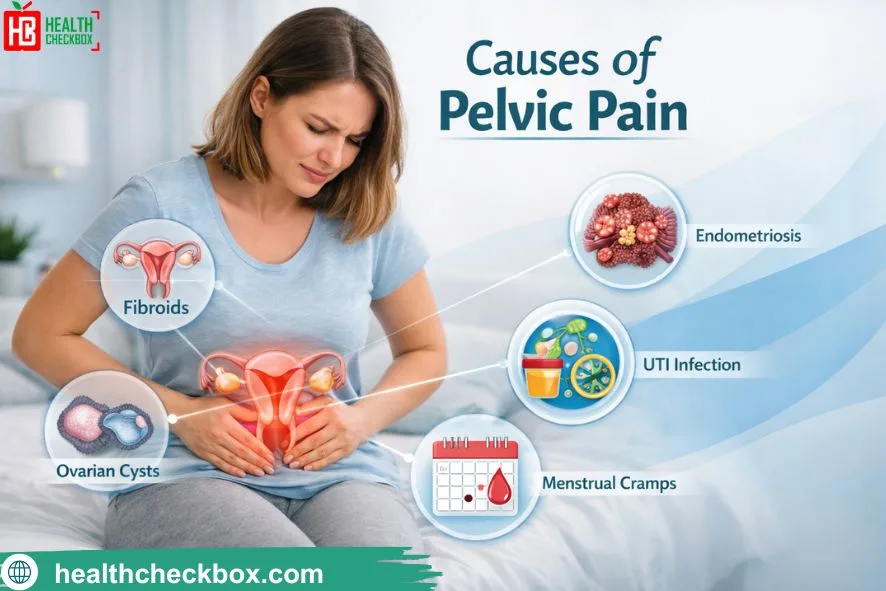
The pelvis is the area at the bottom of the abdomen or belly. Pelvic pain in women is common, even though it happens to men. Pelvic pain can feel sharp, dull, cramping, or burning, depending on the cause. Sometimes it can be the sign of infection and problems in the reproductive system. Pelvic pain can come suddenly. It can be severe, chronic and the pain can go and come, it can stay for months or longer. Sometimes it can show zero improvement with the treatment. It can be caused by the issues that can be discomforting. Some of the common causes of pelvic pain helps you to find out the appropriate treatment and give relief. In this article, we explain pelvic pain in women, including causes, symptoms, diagnosis, and treatment options.
What is Pelvic Pain?
If you have any pain or tension in muscles and irritation in nerves, intestine or bladder areas then it can cause pelvic pain. Chronic pelvic pain is pain that lasts for 6 months or longer. It refers to the soreness, aching and tenderness that is felt below the belly button or between the hip bones. This pain can stay in one spot or it can also move from one place to another. Pelvic pain can be an issue in the urinary, reproductive, nervous, or digestive systems.
Common Causes of Pelvic Pain
There are many causes of pelvic pain, which are mentioned below:
Menstruation Pain and Cramp
Menstruation cramping and pain are one of common causes of pelvic pain. In the reproductive year, some women feel pain for at least 1-2 days every time during the menstruation. Using a warm hot pad can make you relax or take ibuprofen and naproxen medicines to relieve the pain after asking your doctor. It occurs in the lower part of the pelvis. Sometimes it starts before the periods and continues for the days. This pain feels like a jabbing and sometimes pain can be a worse sign of a condition like endometriosis or adenomyosis.
Ovulation
If you experience intense pain on one side of the pelvis around the middle of your menstrual cycle, it may be ovulation pain (mittelschmerz). It is the German word which doctors use to describe ovulation. Ovulation pain occurs in the lower abdomen or pelvic area, not anywhere in the body. It depends on which side of the ovary is releasing the eggs and its fluid from the ovaries. The eggs flow from the fallopian tube to the uterus and the fluid flows from the ovary to the abdominal cavity and pelvis. Ovulation pain (mittelschmerz) usually lasts a few minutes to several hours, sometimes 1–2 days. If the pain is severe, lasts longer than a few days, or happens frequently, you should consult a doctor.
Urinary Tract Infections
Urinary tract infections happen in the urinary system. It occurs because of vaginal bacteria which enter the urethra. It happens when bacteria overcomes the body mechanism in the urinary tract and this infection can affect the kidney, bladder and tubes. The symptoms are intense and include a frequent urge to urinate with the painful and burning sensation. UTIs are usually treated with antibiotics prescribed by a doctor. You just need to take a short course of antibiotics, drink plenty of water and maintain good hygiene.
Sexually Transmitted Infection
Sexually transmitted infection can also cause pelvic pain like gonorrhea and chlamydia. It happens to those who are sexually active. The symptoms of STI with the pelvic pain is unusual vaginal discharge, painful urination and bleeding between the periods. If you are suffering from any of these symptoms, then you should go to the doctor. Doctors can prescribe you the treatment and antibiotics.
Irritable Bowel Syndrome
Irritable bowel syndrome is also called IBS. It is the disorder which causes pain and symptoms like bloating, constipation and diarrhea. These symptoms can grow up and go away with time. IBS has no permanent treatment but it can be managed by taking care of the symptoms. Such as taking a balanced and proper diet, good lifestyle and medication, it can help to lessen the stress and reduce the pain.
Ectopic Pregnancy
When a woman is pregnant the embryo is implanted inside the womb it is a normal pregnancy. But when the embryo implants outside the womb and it starts to grow, it is known as ectopic pregnancy. You may have felt a sharp pelvic pain and cramp on one side. The other symptoms are vaginal bleeding. This is a life threatening issue and it requires medical care.
Pelvic Inflammatory Disease
Pelvic inflammatory disease is also called PID. It is a type of infection which occurs in the female reproductive organs and it damages the surrounding tissue of the womb. It occurs when the bacteria of vagina enter inside the womb and take the lead. PID is often caused by untreated STIs such as gonorrhea or chlamydia, but they are different conditions. As the PID also has the disease of gonorrhea and chlamydia. They also face the symptoms of abnormal vaginal discharge and bleeding. In women, it can increase the risk of infertility and make the pregnancy difficult. Taking antibiotics is the only way to cure this bacteria. But if it is not treated, it can infect the uterus, ovaries and fallopian tubes, resulting in chronic pelvic pain.
Ovarian Cysts
Ovary sacs are filled with fluid and they develop on the surface of the ovaries. They are different in size and from the normal monthly ovulation process. Most ovarian cysts occur during the normal ovulation process when follicles fail to release an egg or fail to shrink after releasing it. When they grow they cause pelvic pain, bloating, pressure or discomfort. It leads to the sudden sharp pain in the lower abdomen and it also bleeds or bursts. So, because of that you may need medical treatment and the doctor will suggest you have an ultrasound. Mainly, they disappear on their own without causing any symptoms.
Uterine Fibroids
Fibroids are lumps of muscle, and they are the fibrous tissues. It only grows in or on the uterus, not the ovaries. It is the most common gynecologic tumor. Normally, they don’t cause any pain but they can change when they grow and when fibroids press on surrounding organs or muscles. They become the source of pain, abnormal bleeding, lower back pain, discomfort in the pelvis, cramping during menstruation and pain during sex. Sometimes the fibroids location and size can also contribute to lower back pain and abdominal pain. Uterine fibroids may cause reproductive issues like pregnancy complications, pregnancy loss and fertility.
Endometriosis
Endometriosis develops when the similar tissue of the endometrium that is inside the uterus starts to grow outside the womb. This tissue is found on the ovaries, pelvic structure or fallopian tubes. When the period starts, the tissue which is outside the uterus starts to produce hormones. It can cause pain, heavy periods, and fertility problems. This tissue can bleed during a menstrual cycle and it is also connected to other organs that cause pain. The pain depends on where the tissue is implanted. Like some pain occurs in the menstruation or some have before or after the menstruation.
What are the Symptoms of Pelvic Pain?
The pelvic pain may happen because of normal activities which you might do on regular basis, like exercising, going to work or having sex. Pelvic pain can be steady and it can come and go easily. It feels like a sharp, stabbing or burning sensation and sometimes it happens in one specific spot only.
The symptoms of pelvic pain that women feel during their menstrual period make periods worse. It happens because of the causes of irregular periods in women. This happens with menstrual cramps, digestive issues or endometriosis like IBS. It can be the cause of constipation, rectal bleeding and diarrhoea. Pain during sexual activities can be the sign of pelvic floor dysfunction. You may also feel pain when urinating or when you lift up heavy things. If you suffer from fever, chill, hip pain and back pain for a long time then maybe you are having pelvic pain.
How is Pelvic Pain Diagnosed?
Your doctor may ask you some questions to identify the cause of pain like:
- What does the pain feel like, such as sharp or dull?
- When and where does the pain happen?
- Since when have you suffering from the pain?
- Is the pain related to the periods, urination or any intercourse activity?
- What and how is your health history?
To identify which pelvic pain you are suffering from, your doctor does some tests like:
- Pregnancy test
- Blood test
- Urine test
- Sexually transmitted infection
- Pelvic X-ray
- CT Scan
- MRI
- Ultrasound
- Laparoscopy
- Sigmoidoscopy
- Colonoscopy
How to Treat Pelvic Pain?
The treatment depends on the pain you are suffering and its cause.
Medical Treatment
- Medication: You can use the medicines for nerve pain, muscle relaxers or you will use prescribed medicine to reduce the pain. If it is an infection, then you should use antibiotics.
- Surgery: If one of your organs is paining then it might lead you to undergo surgery.
- Physical Therapy: If the pain is in the muscles of the pelvis then physical therapy is the best option for you to reduce the pain. It helps to strengthen and improve your muscles and coordination to maintain your body.
Home Treatment
- Pain Reliever: It will help you to relax from excessive pain and reduce the swelling too.
- Exercise: If you don’t move much then it will create problems in your body and increase the pain. Doing exercise and stretching will help you to tighten the muscles and it will also increase the blood flow.
- Heat: Applying a heat pad or warmer cloth in the painful area, it can help to reduce the pain. You can also take a long hot bath to relax in the area of pain.
- Stop smoking: Cigarette and tobacco products can impact your health and they can also inflame the nerves and increase the pain. So you should avoid taking it to relieve the pain.
- Relaxation: Doing yoga and meditation helps to relax your body. It also helps to reduce the stress, tension and anxiety.
Prevention of Pelvic Pain
- You should take small steps in your daily lifestyle to prevent from the pelvic pain
- Overuse of pelvic muscles can make your health worse. Stay active with moderate exercise. Otherwise, it will strain your muscles and nerves.
- Do minimized exercise on daily bases to stay active and it will help your joints and muscles to stay in good condition. But you should stretch before the exercise to warm up and to reduce the risk for injury.
- If you are having pelvic pain because of the digestive system then you should eat fiber and vitamin products to stay healthy. It will also help to reduce the pelvic pain.
- You should go to your healthcare provider for check ups so you can identify your problems before it gets worse.
When to See a Doctor?
Not every type of pelvic pain is serious, but some are. So you should go for a check up if you are facing problems. Like facing sharp or sudden pain that is not going even after taking a pain reliever. If you are suffering from vomiting, fever and nausea, then you should seek medical advice.
Conclusion
We hope that this blog helps you to understand everything about the pelvic pain. There are some common causes of pelvic pain such as menstrual pain, UTI, STI, PID, IBS and many more. There are some tests which a doctor does to identify what type or cause of pelvic pain you are suffering from like MRI, blood test, CT scan, etc. Then there are some treatments according to that for example, medication, surgery or just home treatment like meditation, exercise and many more.