

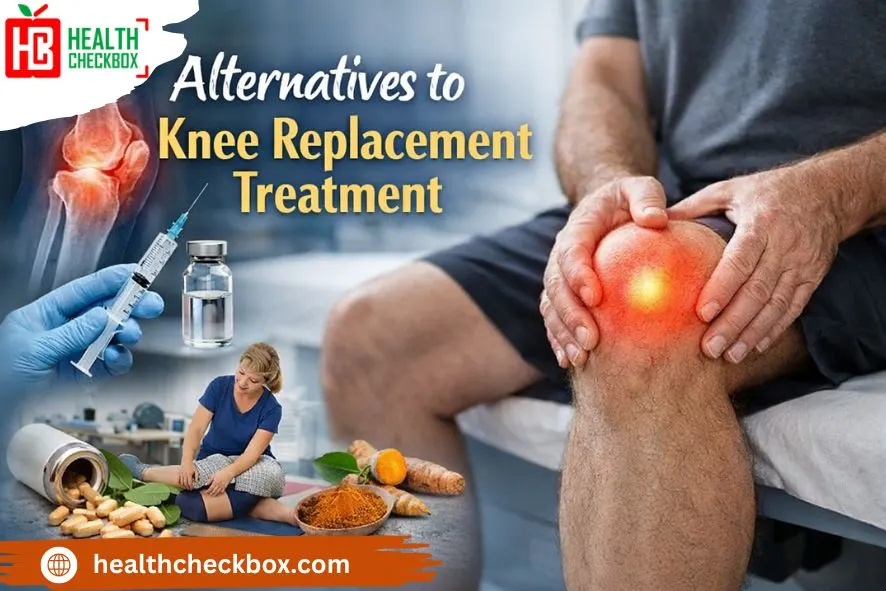
The knee replacement surgery can be used in a critical knee arthritis, chronic knee pain, and any advanced joint damage to the knees. However, most patients will tend to shun the surgery and seek out alternatives to the surgery. Non-surgical operation helps to reduce the knee pain, mobility and delay or to avoid knee replacement surgery. Popular alternatives are physiotherapy for knee pain, weight management, injections like steroids to reduce the swelling and pain, hyaluronic acid injection and stem therapy. These are the small minimal invasive techniques which help the joint to function again and preserve it.
Choosing the right alternative depends upon a lot of things which can be considered before proceeding for the alternative procedure. In this article, we will discuss the alternatives of knee replacement, their types and how to choose which one is for you according to the conditions.
When to Consider Alternatives to Knee Replacement?
Alternatives should be considered for moderate knee pain, the condition of the knee is in early stages, or the patient is a young adult. Key situation to consider the alternatives:
- Mild Osteoarthritis: If the damage is not severe, then non-surgical procedure can be considered.
- Younger Adults: Since artificial implants last for 15-20 years, the younger individual is advised to delay the procedure as they need to re-do it.
- Lifestyle change: Weight loss and low impact exercise reduce the stress in the knee.
- Physiotherapy: Specialized knee exercises in order to strengthen the muscles.
- Injections: Cortisone is taken in inflammation cases, Hyaluronic acid is applied in lubricating the bone joint and Platelet rich plasma is taken.
10 Alternatives to Knee Replacement Treatment
These are the mentioned alternatives that can delay the knee replacement surgery for a time period.
Lifestyle Modifications and Weight Management
- Targeted Weight Loss: Try to lose some weight in order to reduce the stress from the knees.
- Calorie Management: Eat a balanced diet, rich in nutrients like vegetables, fruits and right proteins to achieve a sustainable and a modest degree of calorie-deficit.
- Water Intake: Adequate intake of water makes the joint lubricated by the synovial fluid.
Physical Therapy and Exercise Programs
Exercises aimed at knee pain are primarily directed at strengthening the quadriceps, hamstrings and hips. Which contribute to the increase in the stability and decrease of the pressure in the joint. These practices are specially made to restore the range of motion. There are various practices which are listed below:
- Straight Leg Raises: It helps us to strengthen the Quadriceps.
- Wall Squats: It helps us to strengthen the thighs.
- Side-Leg Raises: It helps us to improve the hip and outer strength for better stability.
- Glute Bridges: It helps to reduce the pressure on the knee.
- Step-Ups: It helps us to strengthen the thigh muscles to improve the function for daily activities.
- Quad-Sets: It helps us with strengthening the knee muscles.
These are some of the exercises which can help us to strengthen the body parts and improve the quality of life.
Medications for Knee Pain Relief
There are some medications available to get relief from the knee pain which can help us to delay the procedure:
Pain Relievers
There are various painkillers which can temporarily help us to get relief from the pain for a certain amount of time. The names of those are NSAIDs for inflammation and pain, acetaminophen for pain relief, topical gels, and injections.
- Acetaminophen(Paracetamol): Good for mild and moderate pain, but doesn’t help with inflammation.
- NSAIDs: It reduces both pain and inflammation, like ibuprofen and naproxen.
- Topical Pain Reliever: Cream and gels which can be directly applied to the knee.
Injection-Based Treatments
Injection based treatment is used when the patient is having osteoarthritis, which helps to reduce the pain, inflammation, and improve joint lubrication. Various options are there in injections like Corticosteroid injection, hyaluronic acid shot, or PRP and stem cell.
- Corticosteroid Injection: It is a Powerful anti-inflammatory medication which is used to get quick relief from the pain and usually lasts 2-3 months.
- Hyaluronic Injection: It injects a natural lubricant into the knee to reduce the friction and pain from the knee.
- Platelet Rich Plasma: Using the patient’s own blood platelets to heal the soft tissue.
- Stem Cell Therapy: It is an experimental procedure which is not approved by FDA and it basically regenerates the damaged cartilage.
Bracing and Assistive Devices
Bracing and Assistive Devices are for knee pain, like unloader braces, hinged supports, and compression sleeves. These things help to manage the pain, swelling and stabilize the joints. Check the best knee braces after surgery:
- Unloader Braces: It is specially for Osteoarthritis, and this device shifts the pressure from the damaged part to the healthier side. It helps to relieve pain and improve the stability.
- Hinged Knee Braces: They provide support to both the knees and protects the ligament like ACL, MCL and restrict harmful lateral movement while bending.
- Compression Sleeves: They are ideally used for mild arthritis and swelling and provide warmth, comfort and enhance joint awareness.
Assistive Devices are:
- Canes: The weight can be greatly decreased by walking with a cane in the hand opposite the injured knee.
- Crutches/Walkers: Used to offload weights during acute injuries or can be used after post surgery.
- Insoles: These are the custom insoles which help to improve alignment to reduce the knee strength.
Minimally Invasive Procedures
Minimally invasive procedures include arthroscopy surgery, PRP Injection and subvastus total knee replacement. These are the procedures in which we do small incisions to minimize the tissue damage and reduce knee pain.
- Knee Arthroscopy: A small camera is inserted through the small incision to diagnose and treat issues like meniscus tear and ligament injuries.
- Minimal Invasive Total Knee Replacement Surgery: It involves smaller incisions, which spares muscles and tendons which leads to less pain and speedy recovery.
- Subvastus Total Knee Replacement: It is a muscle sparing surgical technique that does not cut tendons, quadriceps, which results in less pain and faster recovery.
Regenerative Medicine Approaches
This Regenerative medicine approach is a non-surgical procedure where we use medicine to reduce the inflammation, reduce pain and stimulate tissue healing. There are various Regenerative techniques that is mentioned below:
- Platelet Rich Plasma Theory: It involves drawing the patient’s blood, processing it to concentrate platelets, and injecting it into the knees to boost the healing power. This also reduces the pain and improves the functions.
- Stem Cell Therapy: These stem cells are often extracted from bone marrow or form fat tissues, to regenerate cartilage, tendons and ligaments.
- Prolotherapy: In this we use hypertonic dextrose injection to induce an inflammatory response, stimulating the body to repair its ligaments and joints.
- Autologous Protein Solution: It is a new technology that concentrates on both factor and anti-inflammatory molecules from the patient’s blood.
Dietary Supplements for Joint Health
Effective dietary supplements for Joint health include glucosamine and chondroitin, they help us to maintain the cartilage and reduce stiffness. Other products that can be turmeric(curcumin) and boswellia to reduce the inflammation. If these items are taken consistently, it can increase mobility and reduce pain associated with osteoarthritis.
- Glucosamine & Chondroitin: If we combine these two, then it can reduce the pain, swelling, and stiffness from the cartilage area.
- Turmeric(Curcumin): This helps to reduce joint pain in knee osteoarthritis.
- Boswellia: It is a plant extract that can help reduce joint pain and improve mobility.
- Omega-3 Fatty Acid: This helps to reduce joint tenderness and stiffness.
Alternative and Complementary Therapies
There are various alternatives and complementary therapies for knee pain, some of them are Tai chi, Yoga, and Acupuncture. Other approaches are weight loss, Nutritional Supplements and topical treatment like capsaicin. Approaches are mentioned below:
- Mind-Body Exercise: For improving pain, functions and mobility we are advised to do Tai Chi and yoga.
- Acupuncture: It is widely recognised for alleviating knee osteoarthritis symptoms.
- Lifestyle Modification: Weight loss can help reduce pressure on the knee joints.
Ayurvedic and Herbal Treatments
Ayurvedic treatment mainly focuses on reducing inflammation, calming Vata dosha and strengthening joints with various other ayurvedic therapies which are mentioned below:
- Janu Vasti: Warm, medicated oil is spread over the knee joint within a boundary of herbal dough to deeply penetrate the tissues and alleviate the pain.
- Abhyanga (Oil Massage): This oil massage reduces stiffness and improves circulation.
- Pizhichil: Warm medicated oil over the body to soothe muscles and joints.
Herbal Remedies:
Herbal and natural home remedies for knee pain also play a crucial role for older and young patients.
- Turmeric & Ginger: It has anti-inflammatory properties, which can often be consumed with tea or in milk.
- Mahanaryana Thailam: It is an oil which is used for strengthening and reducing the joint pain.
- Ashwagandha: It helps to manage stress-related joint inflammation.
Partial Knee Replacement (As an Intermediate Option)
Partial knee replacement is an alternative to knee replacement. It is a minimally invasive surgery that replaces the damaged part of the knee, while preserving the healthy bones and ligaments. It’s ideal for those patients who have early stages of arthritis, offers faster recovery and more natural knee motion.
Advantages
- Faster Recovery: Most patients walk within 1-2 days, with 3-6 weeks recovery period which may be longer in the case of total knee replacement surgery.
- Less Invasive: Smaller incisions are made which results in less tissue pain and trauma.
- Natural feelings: The preservation of healthy ligaments allows us to feel more natural knee.
Disadvantages
- Longevity: These implants will last only 10-15 years which is less as compared to total knee replacement.
- Possible Complication: There can be potential risk of blood clots, and many more dangers.
Risks and Benefits of Non-Surgical Treatments
Benefits of non-surgical treatments:
- Avoiding Surgical Risk: No Surgical procedure means no infections, clots, and no nerve damage.
- Delay Surgery: Doing physical therapy regularly can help to delay the surgical procedure.
- Functionalities & Pain Relief: Reducing weight, doing strengthening exercises and taking injection of PRP will significantly help with knee pain and improve their function.
Risk of Non-Surgical Treatments are:
- Temporary Relief: Many non-surgical methods and injections only provide relief for a short period of time and need to continue in future.
- Ineffective in Severe Cases: Severe cases like Osteoarthritis, these non-surgical procedures will not give relief as compared to getting a total knee surgery.
- Delayed Treatment: Being more dependent upon the conservative methods can eventually lead to more complex and high risk surgery.
How to Choose the Right Treatment Option?
Choosing the right treatment options for alternatives to knee replacement surgery involves assessing the severity of joint damage, age, activity level, etc.
- Lifestyle Modification: Maintain a healthy body weight, which can reduce the pressure on the joints and can ease pain.
- Medication: It can help to manage and ease pain in the knees and stronger medicine can provide relief for longer periods and can delay the surgery.
- Physiotherapy: Physiotherapy plays a crucial role in maintaining the knee pain with the help of custom exercises. This is specially designed to ease the pain and improve mobility.
- Assistive Devices: These are the devices which can give stability and give support, with this they can take pressure off from the knees to make movement feel more natural.
When to Prefer a Knee Surgery?
Surgery can become the right choice when you have constant pain in your knees, even when you are not doing any activities. This also means that non-surgical methods fail to provide the reliefs from the pain. If the joint damage is critical, then this can create problems while moving and can affect the quality of life.
Conclusion
In this article, we have covered all the information related to the alternatives to knee replacement surgery. The article also covers, when to consider the alternatives to knee pain and also mentions 10 alternatives, ayurvedic medicine, bracing and assistive devices, injection based treatments and many more. We have mentioned risk and benefits for choosing an alternative to knee replacement surgery and when to choose them.