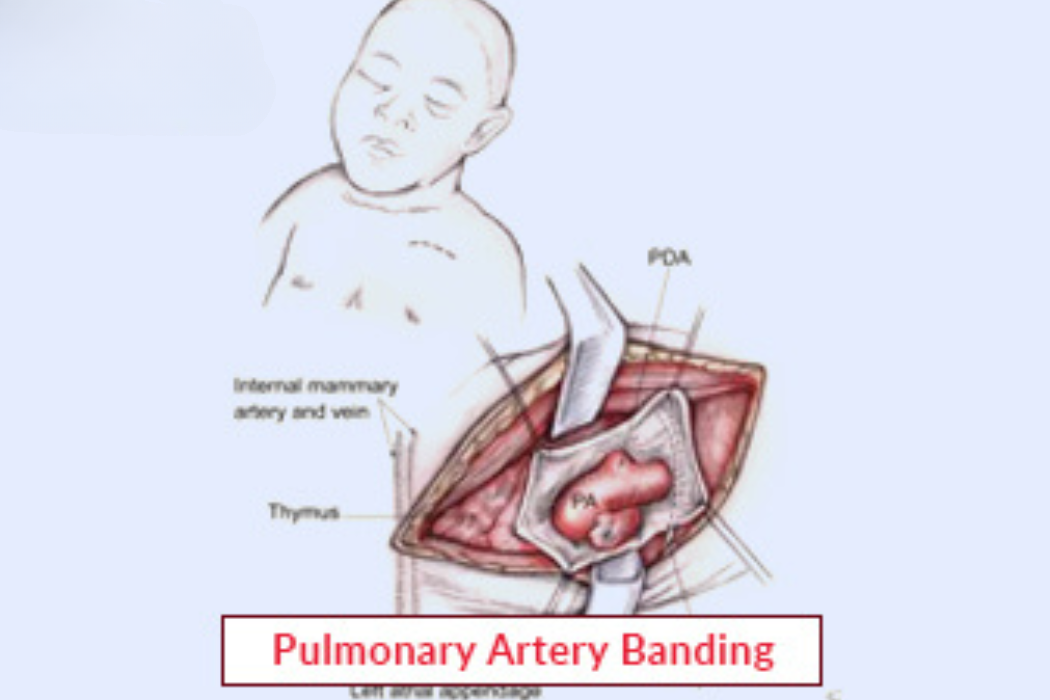
Pulmonary Artery Banding is a pediatric cardiac surgery. It is used to reduce the excessive blood flow to the lungs in patients. In this medical procedure, the surgeon places a band around the pulmonary artery to control blood flow. This procedure reduce the pressure in the lungs and aid to heart in functioning more effectively. This surgery is commonly performed on infants and children who are not yet ready for a complete heart surgery.
Why is this Surgery Performed?
The procedure operates as a temporary solution which maintains patient stability until surgeons can complete permanent heart repairs in future. The aim of pulmonary artery banding treatment is to achieve distinct medical targets which include:
- Aims to decrease lung arterial pressure
- Preventing heart failure
- Enhances oxygen flow
- Maintains stability of congenital heart defects
- Prepares patients for their upcoming cardiac operations
The procedure of pulmonary artery banding heart surgery has become a standard treatment method which Indian advanced cardiac hospitals use to deliver safe and effective medical care.
Who Needs Pulmonary Artery Banding Surgery?
This surgery is ideal for infants and young children who are suffering from congenital heart disease.
- Infants with Ventricular Septal Defect (VSD)
- Patients with Transposition of the Great Arteries (TGA)
- Children with Single Ventricle Defects
- Babies with Atrioventricular Septal Defect
- Congenital heart disease patients with pulmonary hypertension
- Patients not ready for immediate corrective heart surgery
Symptoms of Pulmonary Artery Banding
- Rapid breathing
- Poor weight gain in infants
- Frequent lung infections
- Heart failure symptoms
- Low oxygen levels
- Difficulty feeding
If the medications are not enough to treat these symptoms and open heart surgery is risky for the patient, then doctor suggests this artery banding surgery.
Pulmonary Artery Banding Procedure Step-by-Step
The pulmonary artery banding procedure is performed by specialized pediatric cardiac surgeons in a fully equipped cardiac operation theatre.
Before the Procedure
Before performing the treatment, doctor conducts some medical or physical tests, which include:
- Physical examination
- Echocardiography
- Chest X-ray
- Blood tests
- ECG
- Oxygen level monitoring
Doctors also check child’s heart condition, lung pressure, and age or weight. The patient is admitted to the hospital for 1-2 days for surgery preparation or monitoring.
During the Procedure
The duration of this surgery is around 2-4 hours, which depends on the patient's heart and overall health condition. Initially, surgon given general anesthesia to the patient, and then surgeon makes a small incision in the chest. After that, they placed a medical band around the pulmonary artery. Then, surgeon monitored the patient’s heart or lung pressure, and adjusted the blood flow level. The surgeon closed the incision and shifted the patient to the ICU.
After the Procedure
After every surgery, the recovery is one of the crucial parts for a patient. So, after monitoring for 2-3 days in ICU, doctor reviews their oxygen level and heart condition. Generally, after pulmonary artery surgery patient may have to stay in hospital 5-10 days. The full recovery time of this surgery is 3-4 weeks, which depends on patient's health condition.
Tip: Don’t skip any scheduled visits and follow-ups.
Risks and Complications
There is a chance of some risks and complications after pulmonary artery banding surgery. The possible risks can be as follow:
- Infection
- Bleeding
- Band displacement
- Pulmonary artery narrowing
- Heart rhythm problems
- Breathing difficulty
- Need for additional surgery
Note: Choose the best cardiac surgeon and hospital for better outcomes.
Success Rate of Pulmonary Artery Banding
The average success rates of this surgery in India range from 85% to 95%, which depends on the various factors. Such affecting factors are given below:
- Patient age
- Heart condition
- Surgeon experience
- Hospital facilities
- Overall health
India is also considered one of the best countries which offers high success rates for cardiac surgery at an affordable price.
Why Choose India for Pulmonary Artery Banding?
India serves as an international center for cardiac surgical procedures and medical tourism because it provides high-quality medical care at reasonable costs. The advantages of pulmonary artery banding treatment in India include the following benefits:
- The hospitals maintain international standards while offering medical services.
- The medical center provides treatment at a cost which patients can afford with short waiting time.
- The staff members at the facility possess English language proficiency.
- The medical team provides international patient support and visa and travel assistance.
Best Hospitals for Pulmonary Artery Banding in India
India has one of the best cardiac hospitals in the world. Here are some leading hospitals given below: